

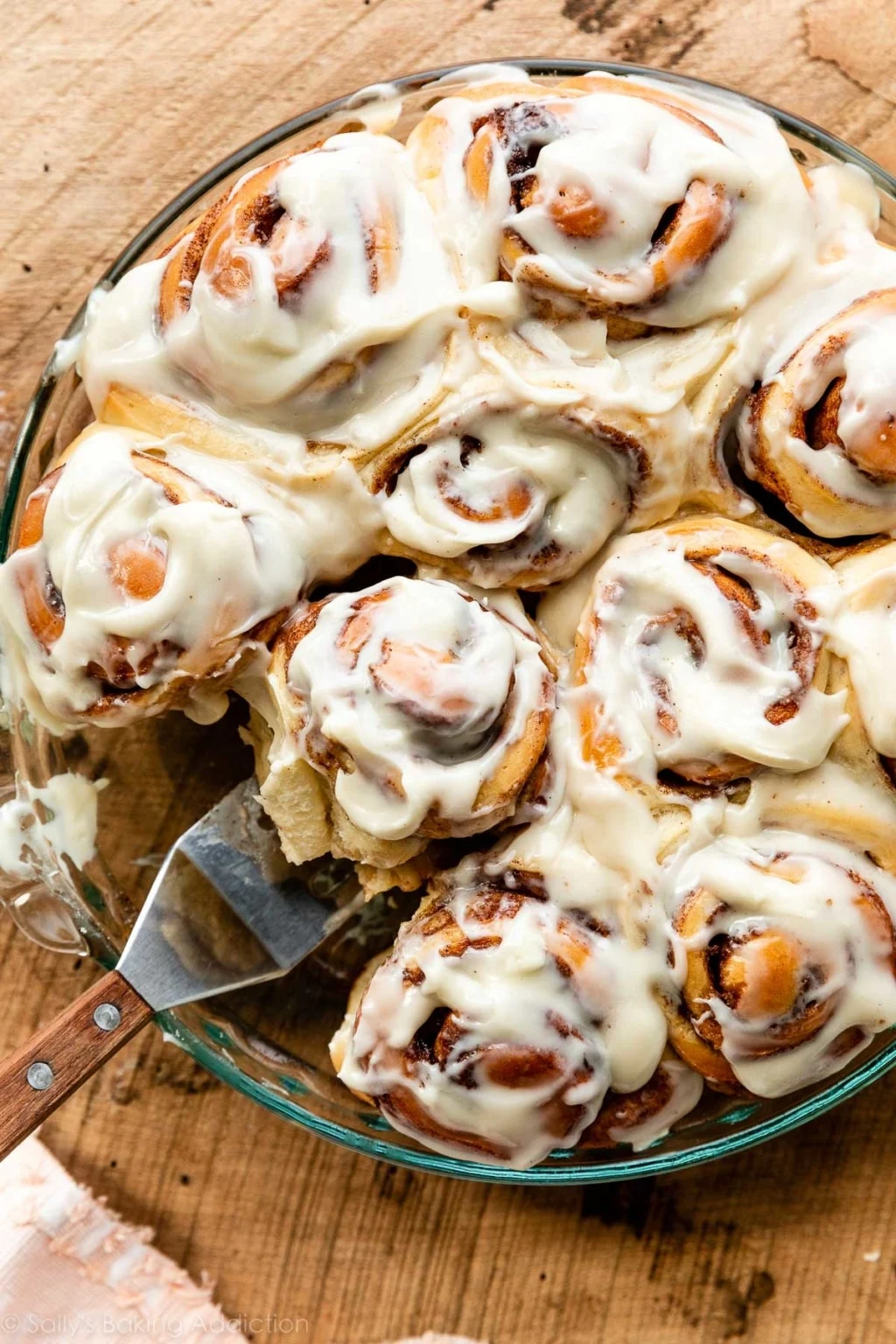
A freshly baked tray of Homemade Cinnamon Rolls is a breakfast treat that’s hard to beat! Soft and fluffy dough is swirled with sweet cinnamon and brown sugar and baked to golden brown perfection before being glazed with cream cheese frosting. Make these buns for special occasions like Christmas morning, Saturday brunch, or as a special treat!
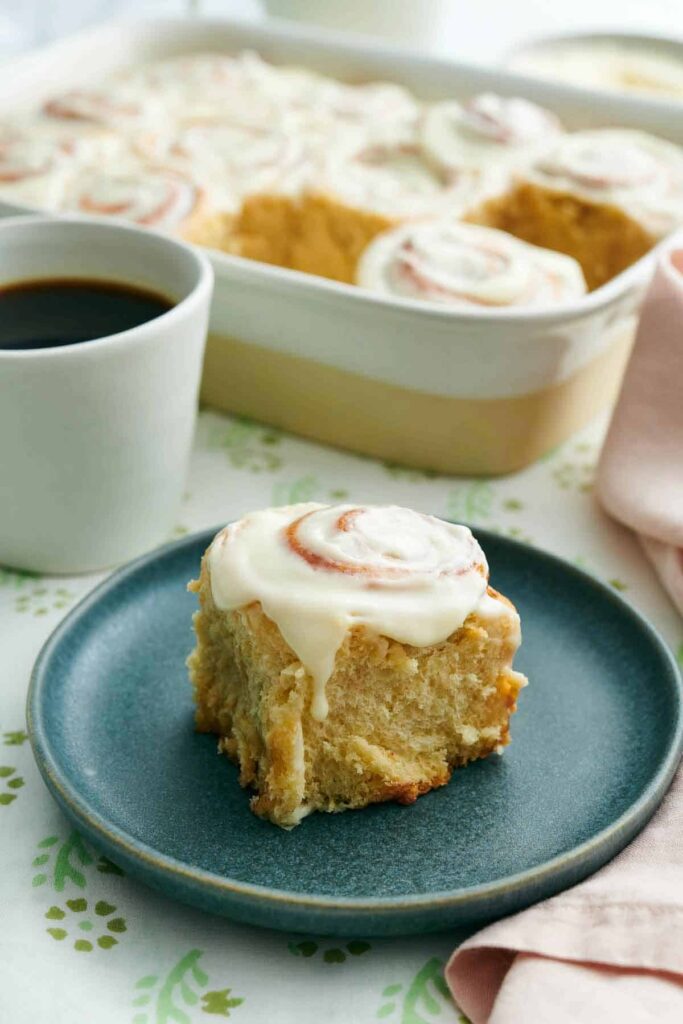
This honestly is the best cinnamon roll recipe (and Brian, who is a self-proclaimed but very experienced cinnamon roll expert, would agree!). I spent months testing this recipe to find the perfect balance of fluffy cinnamon rolls that were also super gooey in the center. Brian loves the centers, and I wanted the pan to be virtually all centers—pillowy soft and gooey with no hard edges. The tricks I discovered? The right balance of milk and butter in the dough and baking the cinnamon rolls in the correct type of pan!
Key Ingredients for Cinnamon Rolls
These are the main ingredients you need to make homemade cinnamon rolls. You can find the full list of ingredients and measurements in the recipe card below.
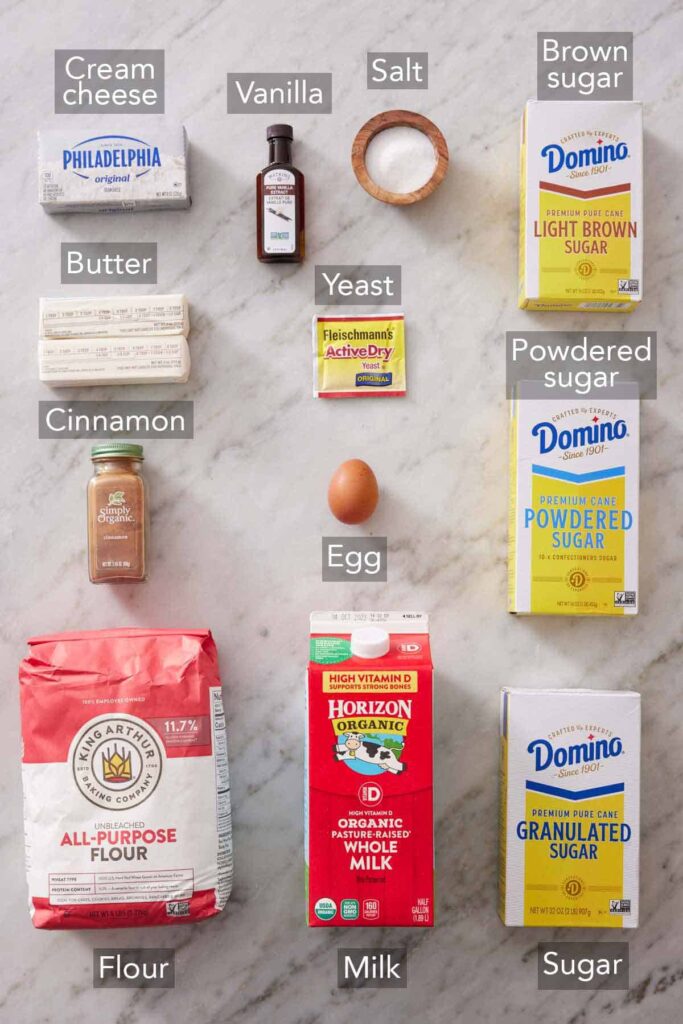
Milk – whole milk will provide the best flavored and textured cinnamon buns as the extra fat tenderizes the dough. Warm the milk to 110-120°F, or until the milk is just warm to the touch.
Active Dry Yeast – be sure to check the expiration date and that it isn’t labeled as rapid-rise or instant yeast. Expired yeast may not rise properly, and rapid-rise yeast shouldn’t bloom in hot liquid. Both of these can cause the rolls will turn out flat and dense. To keep yeast fresh the longest, store it in the refrigerator or freezer.
All-Purpose Flour – for light and fluffy cinnamon rolls, measure the flour by weighing it. If you do not have a food scale, scoop the flour into the measuring cup and level off the top for an accurate measurement.
Egg – one large egg brought to room temperature is all you need. Don’t use a cold egg, as the cold temperature can throw off the yeast’s rising process. To quickly bring an egg to room temperature, place it in a bowl of warm water for 5 minutes.
Unsalted Butter – both room temperature and melted butter are used in this recipe. Room temperature is used in the brown sugar filling, and melted butter makes the rough dough tender and rich. Always use unsalted butter, unless salted is all you have. If so, reduce the salt in the dough to a generous ¾ teaspoon if opting for salted butter.
Baking With Yeast For Beginners
There are two common types of dry yeast– active dry and instant yeast (also called rapid-rise yeast).
- Active dry yeast must be activated by dissolving it in warm water first and allowing it to bloom, or sit until foamy, before adding it to dry ingredients. It also grows more slowly, so the rise times are longer and can be drawn out even more when placed in a cold environment like the refrigerator. This yeast is ideal for making overnight cinnamon rolls and produces baked goods with a deeper flavor.
- Instant yeast can be added to a recipe without being activated first and should not be bloomed like active dry yeast. However, it’s not the ideal choice if you want to hold dough in the fridge for several hours. It is intended to speed up the rising time for yeasted doughs to bake sooner, typically cutting rise times by half. Doughs made with instant yeast can overproof much more easily so keep an eye on them!
For this recipe, I prefer active dry yeast because I often assemble the rolls and hold them in the refrigerator overnight to bake off fresh in the morning. If you would like to make these rolls more quickly, use instant yeast instead and stir it together with the milk and sugar. Skip the 5-minute activation time and immediately move to Step 2. The rise times will be much faster, so check them after 30 minutes for each rise.
The Best Way To Cut Cinnamon Rolls
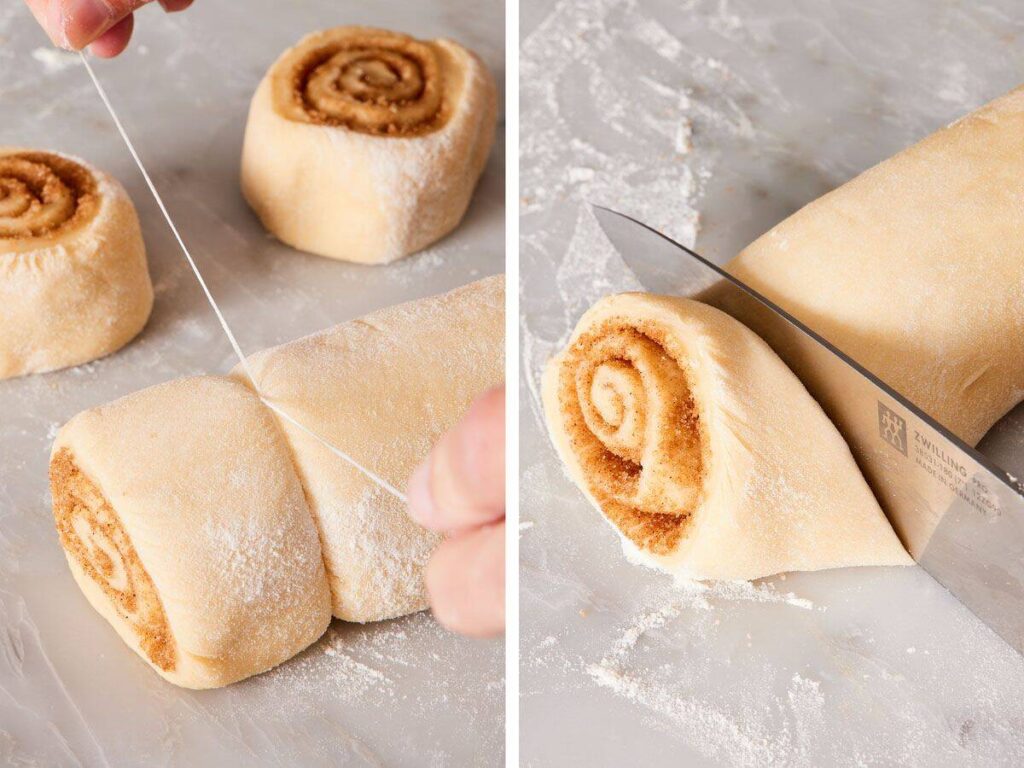
Dental floss is not the most common kitchen tool, but it is the ideal item for cutting perfect cinnamon rolls! Choose unflavored dental floss so your rolls don’t have a minty taste.
To cut the rolls, mark out each one with the blade of the knife down the dough log so you end up with even slices. Slip the dental floss under the dough log at a mark, pull the ends up, and cross them over the dough, then pull firmly and quickly in opposite directions until the floss has cut all the way through the dough. You should have a clean cut and a round slice!
If you don’t have dental floss, use a large, sharp serrated knife (like a bread knife) to cut each slice. Use long cutting strokes to reduce smashing the layer. You can see in the image below that if you use a sharp knife and simply press straight down to cut them, you will smash the dough and lose your defined layers and round shape.
How To Make Overnight Cinnamon Rolls
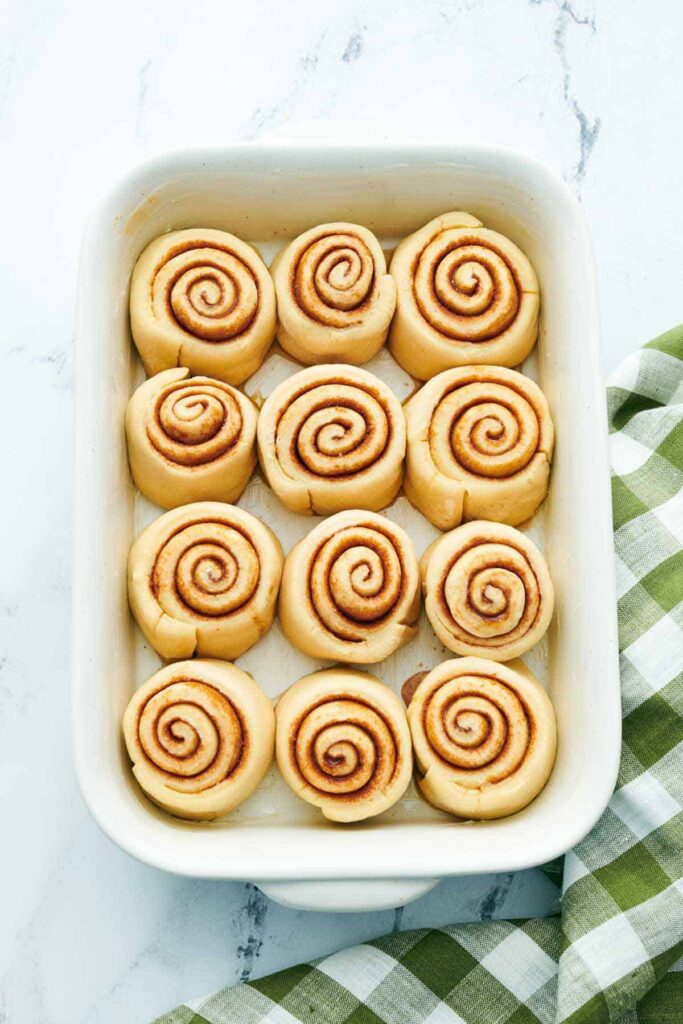
This is the perfect recipe to assemble at night and bake the next morning. To make overnight cinnamon rolls, shape the rolls, cut them, and place them in the prepared baking pan before covering them with plastic wrap and refrigerating for up to 18 hours. Making them ahead like this allows you to skip the second rise, as they will rise in the fridge. When ready to bake the buns, remove the pan from the fridge and let them come to room temperature for an hour. Once at room temperature, uncover the rolls and bake as directed.
Pro Tips For Making The Best Cinnamon Rolls
Proof the dough in a warm but not hot place. The ideal proofing temperature is around 75°. I often proof the rolls in the oven with the heat off but the oven light on. Other great places are on a sunny counter, on top of the refrigerator, or in any other warm place in your house or kitchen.
Spread the rolled dough with very soft, room-temperature butter. If it is still firm, microwave it in 5-second intervals until it is easily spreadable.
Use a ceramic or glass baking pan. Using ceramic or glass creates the softest rolls. Metal conducts heat better and can dry out the rolls on the edges and corners of the pan. They will still bake up fine in metal, but they won’t all be as soft, and the outer rolls will have more of a crust.
How To Make Cinnamon Rolls
Below, I’ve highlighted portions of the recipe in step-by-step process images along with instructions for making cinnamon rolls from scratch. You can find the full set of instructions in the recipe card below.
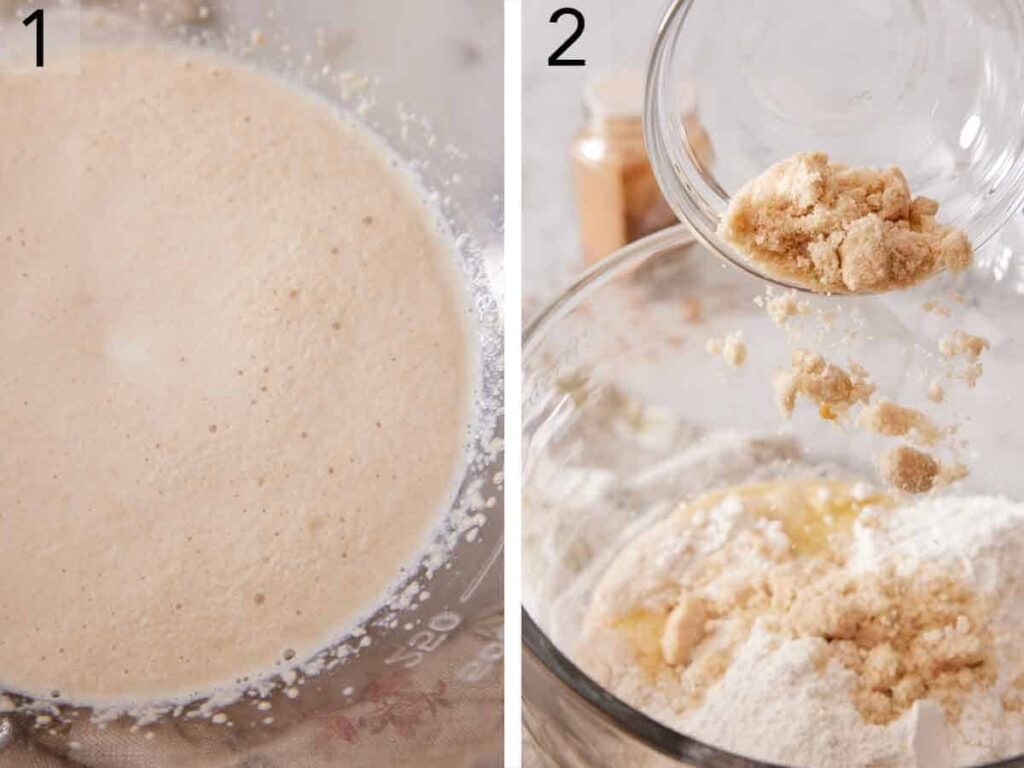
1. In the bowl of a stand mixer, stir together the warm milk, granulated sugar, and yeast, and set it aside until the top is very foamy, about 5 minutes.
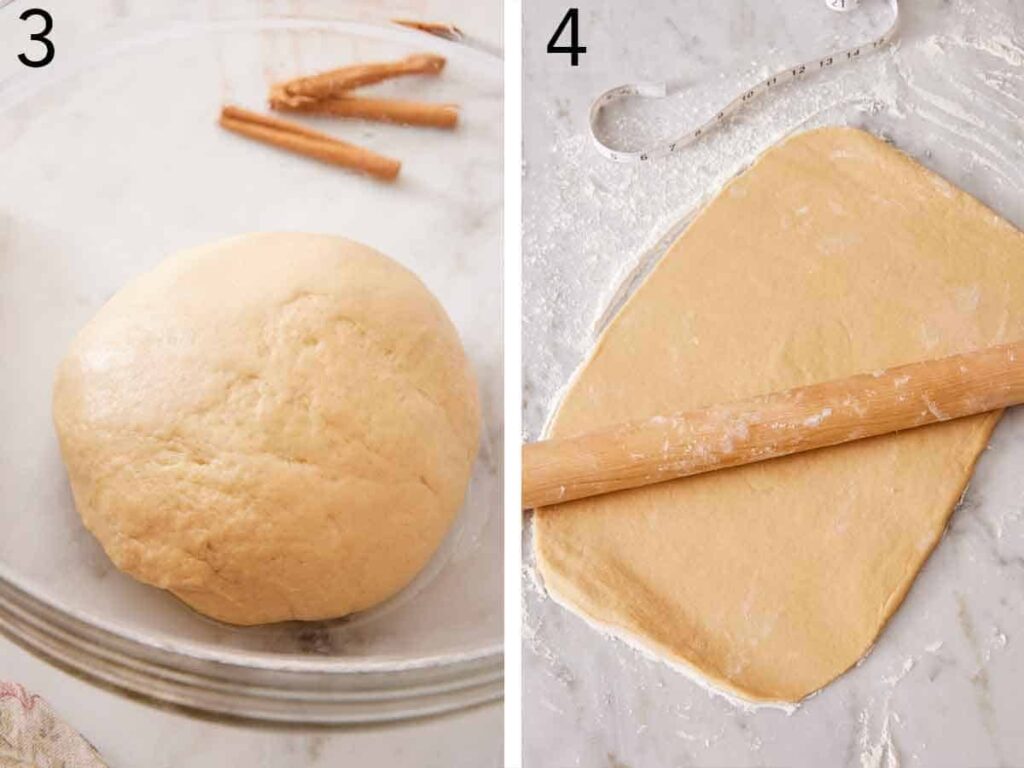
3. Place the dough in a lightly oiled bowl, cover, and leave it in a warm place to rise until doubled in size (1½ to 2 hours). This is the first rise.
4. After the dough has risen, lightly grease a 9×13-inch baking dish. Dust a clean surface well with flour and turn the dough onto it. Then roll and stretch the dough to form a rough 12×24-inch rectangle.
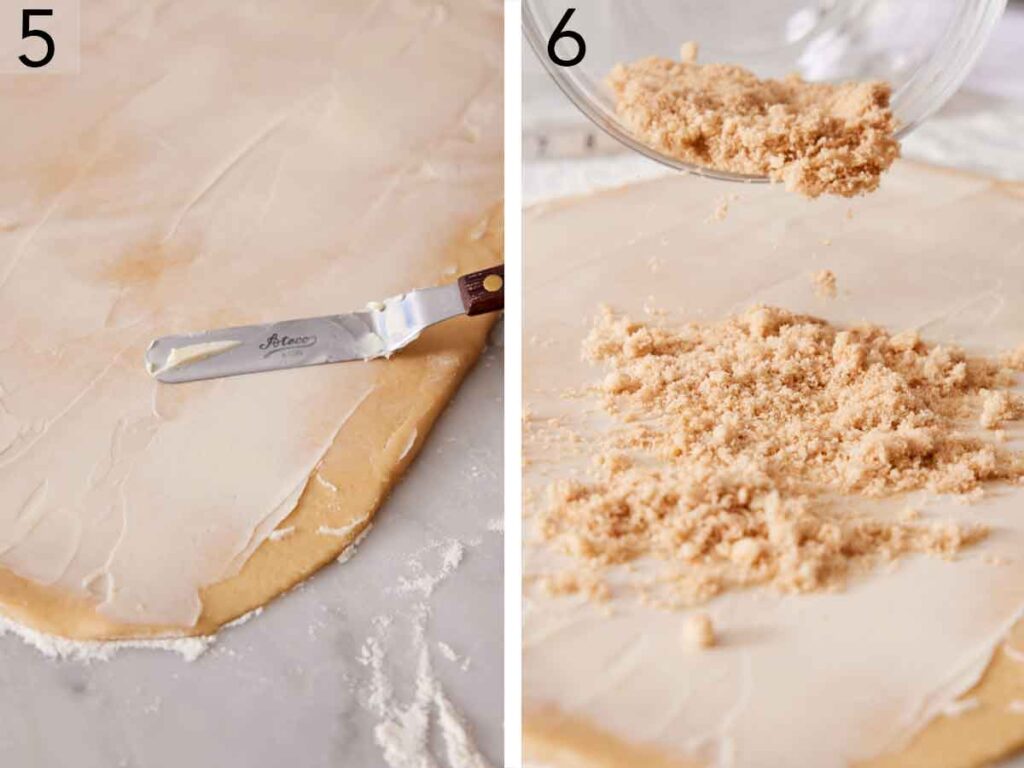
5. To fill the rolls, spread the very soft butter onto the cinnamon roll dough in a thin layer. Leave a ½-inch strip along one long side of the dough free of butter so you can seal the dough once rolled up.
6. Stir together the brown sugar and cinnamon in a small bowl, and sprinkle it evenly over the butter.
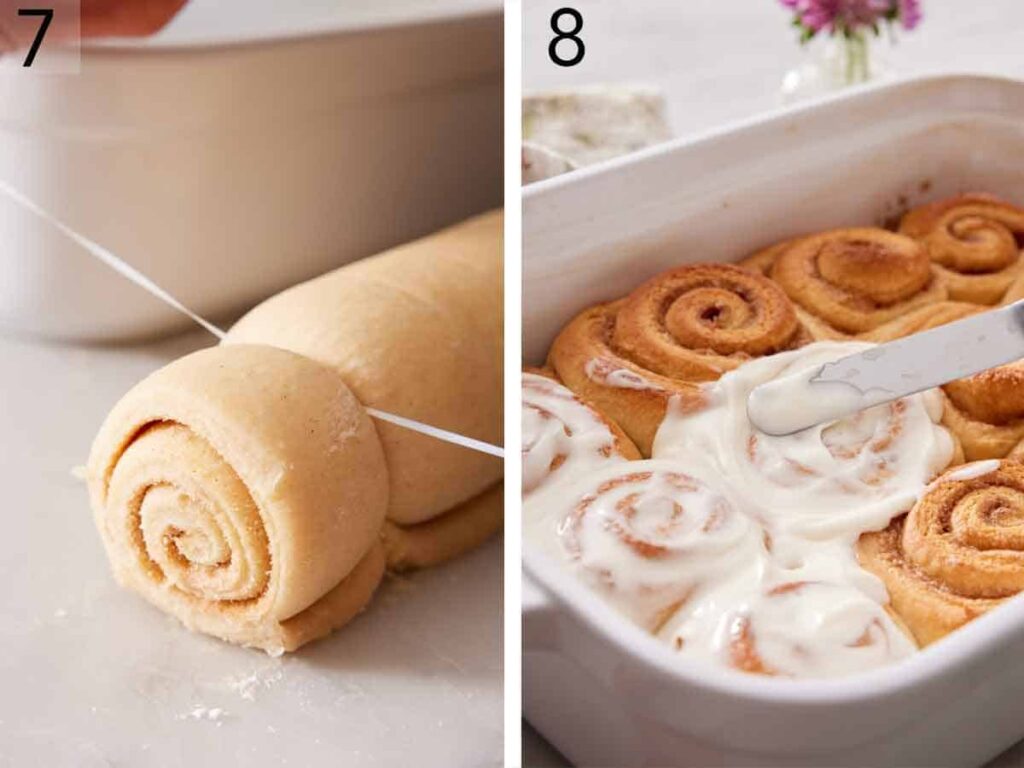
7. To roll the dough, start at the long side across from the unbuttered strip. Roll up the dough into a tight log like a jelly roll. Mark 12 even rolls on the log (about 1½ inches wide), and cut the rolls. Place each roll evenly spaced apart in the greased baking dish. Loosely cover the dish and let the rolls rise for the second time in a warm place until doubled in size (about 1 hour).
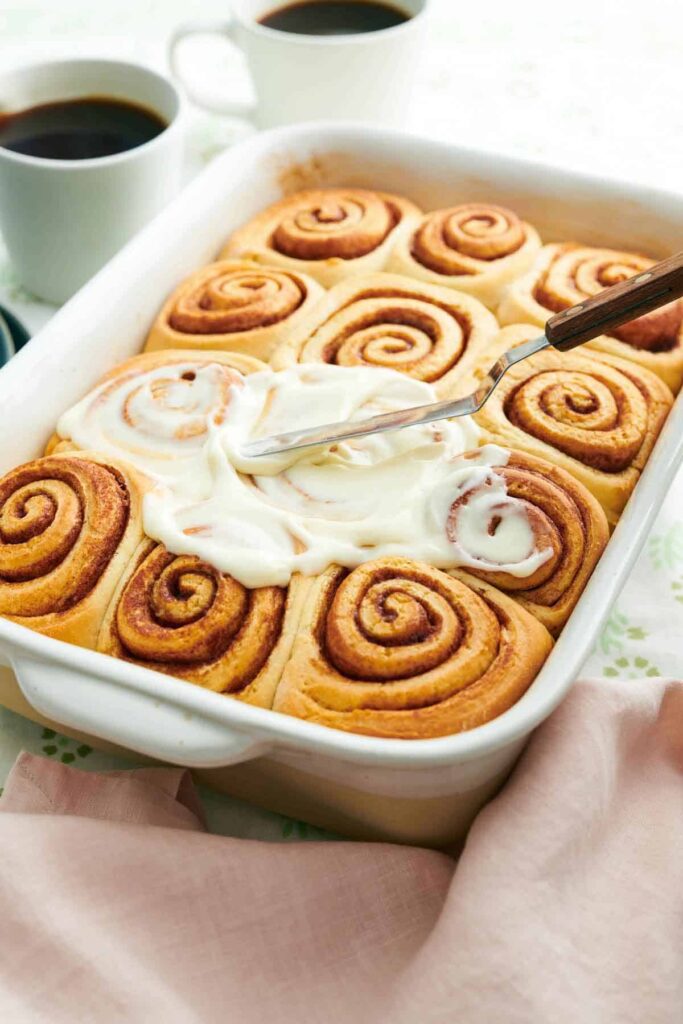
8. When the rolls are close to risen (after about 45 minutes), preheat the oven to 350°F. Uncover and bake the rolls until they are golden brown on top, 20 to 25 minutes. Meanwhile, make the frosting by beating the cream cheese, butter, vanilla, and salt together until smooth. Add the powdered sugar and beat on low speed until well combined. (Thin the frosting with 1 to 2 tablespoons of milk if desired.) Spread one-third of the frosting on the warm rolls as soon as they come out of the oven. Let them cool for a few more minutes, and then spread the rest of the frosting on top. Enjoy the warm cinnamon rolls!
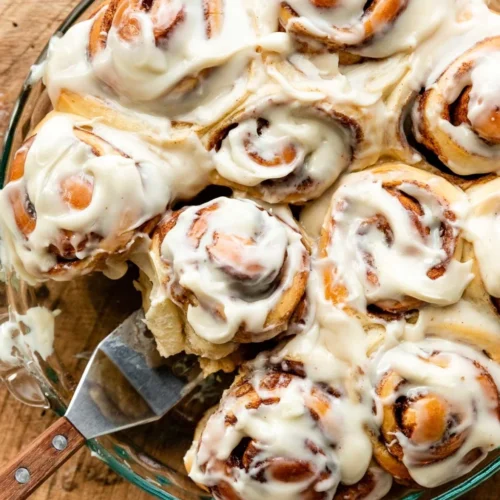
Easy Cinnamon Rolls
Ingredients
- 2 and 3/4 cups (344g) all-purpose flour (spooned & leveled), plus more as needed
- 1/4 cup (50g) granulated sugar
- 1/2 teaspoon salt
- 3/4 cup (180ml) whole milk
- 3 Tablespoons (43g) unsalted butter
- 2 and 1/4 teaspoons Platinum Yeast from Red Star or any instant yeast (1 standard packet)
- 1 large egg, at room temperature
- 3 Tablespoons (43g) unsalted butter, extra softened
- 1/3 cup (67g) packed light or dark brown sugar
- 1 Tablespoon ground cinnamon
- 4 ounces (113g) full-fat block cream cheese, softened to room temperature
- 2 Tablespoons (28g) unsalted butter, softened to room temperature
- 2/3 cup (80g) confectioners’ sugar
- 1 teaspoon pure vanilla extract
Instructions
- Make the dough: Whisk the flour, sugar, and salt together in a large bowl. Set aside.
- Combine the milk and butter together in a heatproof bowl. Microwave or use the stove and heat until the butter has melted and the mixture is warm to the touch (about 110°F/43°C, no higher). Whisk in the yeast until it has dissolved. Pour mixture into the dry ingredients, add the egg, and stir with a sturdy rubber spatula or wooden spoon OR use a stand mixer with a paddle attachment on medium speed. Mix until a soft dough forms.
- Transfer dough to a lightly floured surface. Using floured hands, knead the dough for 3-5 minutes. You should have a smooth ball of dough. If the dough is super soft or sticky, you can add a little more flour. Place in a lightly greased bowl (I use non-stick spray), cover loosely, and let the dough rest for about 10 minutes as you get the filling ingredients ready.
- Transfer dough to a lightly floured surface. Using floured hands, knead the dough for 3-5 minutes. You should have a smooth ball of dough. If the dough is super soft or sticky, you can add a little more flour. Place in a lightly greased bowl (I use non-stick spray), cover loosely, and let the dough rest for about 10 minutes as you get the filling ingredients ready.
- Rise: Cover the pan with aluminum foil, plastic wrap, or a clean kitchen towel. Allow the rolls to rise in a relatively warm environment for 60–90 minutes or until double in size. (For a tiny reduction in rise time, see my answer to Where Should Dough Rise? in my Baking with Yeast Guide.)
- Bake the rolls: After the rolls have doubled in size, preheat the oven to 375°F (190°C). Bake for 24–27 minutes, or until lightly browned. If you notice the tops are getting too brown too quickly, loosely tent the pan with aluminum foil and continue baking. If you want to be precise about their doneness, their internal temperature taken with an instant read thermometer should be around 195–200°F (91–93°C) when done. Remove pan from the oven and place pan on a wire rack as you make the icing. (You can also make the icing as the rolls bake.)
- Make the icing: In a medium bowl using a handheld or stand mixer fitted with a paddle or whisk attachment, beat the cream cheese on high speed until smooth and creamy. Add the butter and beat until smooth and combined, then beat in the confectioners’ sugar and vanilla until combined. Using a knife or icing spatula, spread the icing over the warm rolls and serve immediately.
- Cover leftover frosted or unfrosted rolls tightly and store at room temperature for a day or in the refrigerator for up to 5 days.
Notes
- Make Ahead Instructions: This dough can be made the night before through step 4. Cover with plastic wrap and let rest in the refrigerator overnight. The next morning, remove from the refrigerator and allow to rise in a warm environment, about 1 hour. Continue with step 6.
- Make Ahead Instructions – Freezing: You can freeze the rolls for up to 3 months, and I recommend a few different methods. The first method is to freeze them after shaping, before they rise (before step 5). Thaw in the refrigerator overnight, then let rise for 1.5–2 hours at room temperature before baking. The second method is to par-bake the risen rolls for 10 minutes, let cool completely, then cover and freeze. Thaw in the refrigerator overnight, then let sit at room temperature for 30 minutes before baking. Finish baking at 375°F (190°C) for around 15 minutes. You can also freeze fully baked rolls. See How to Freeze Cinnamon Rolls for more details about all of these methods.
- Special Tools (affiliate links): Electric Stand Mixer or Glass Mixing Bowl with Silicone Spatula/Wooden Spoon | Rolling Pin | 9- inch Round Cake Pan, 9-inch Pie Dish, or 9-inch Square Baking Pan | Instant Read Thermometer | Cooling Rack | Electric Mixer (Handheld or Stand) for icing | Icing Spatula
- Yeast: I highly recommend instant yeast. If you only have active dry yeast, you can use that instead. Active dry and instant yeast can be used interchangeably in recipes (1:1). Active dry yeast has a moderate rate of rising and instant dry yeast has a faster rate of rising; active dry yeast will take longer to raise the dough.
- Milk: This recipe used to call for 1/2 cup (120ml) milk and 1/4 cup (60ml) water. The rolls taste much richer using all milk, and that is what I recommend. Whole milk or even buttermilk are ideal for this dough. If needed, you can substitute 3/4 cup (180ml) lower-fat or nondairy milk.
- Coffee Icing (or Vanilla Icing): Whisk 1 cup (120g) confectioners’ sugar, 1/2 teaspoon pure vanilla extract, and 2–3 Tablespoons (30–45ml) strong brewed coffee together until smooth. Or swap milk for coffee for regular vanilla icing. Drizzle over warm rolls.
- Reference my Baking with Yeast Guide for answers to common yeast FAQs.