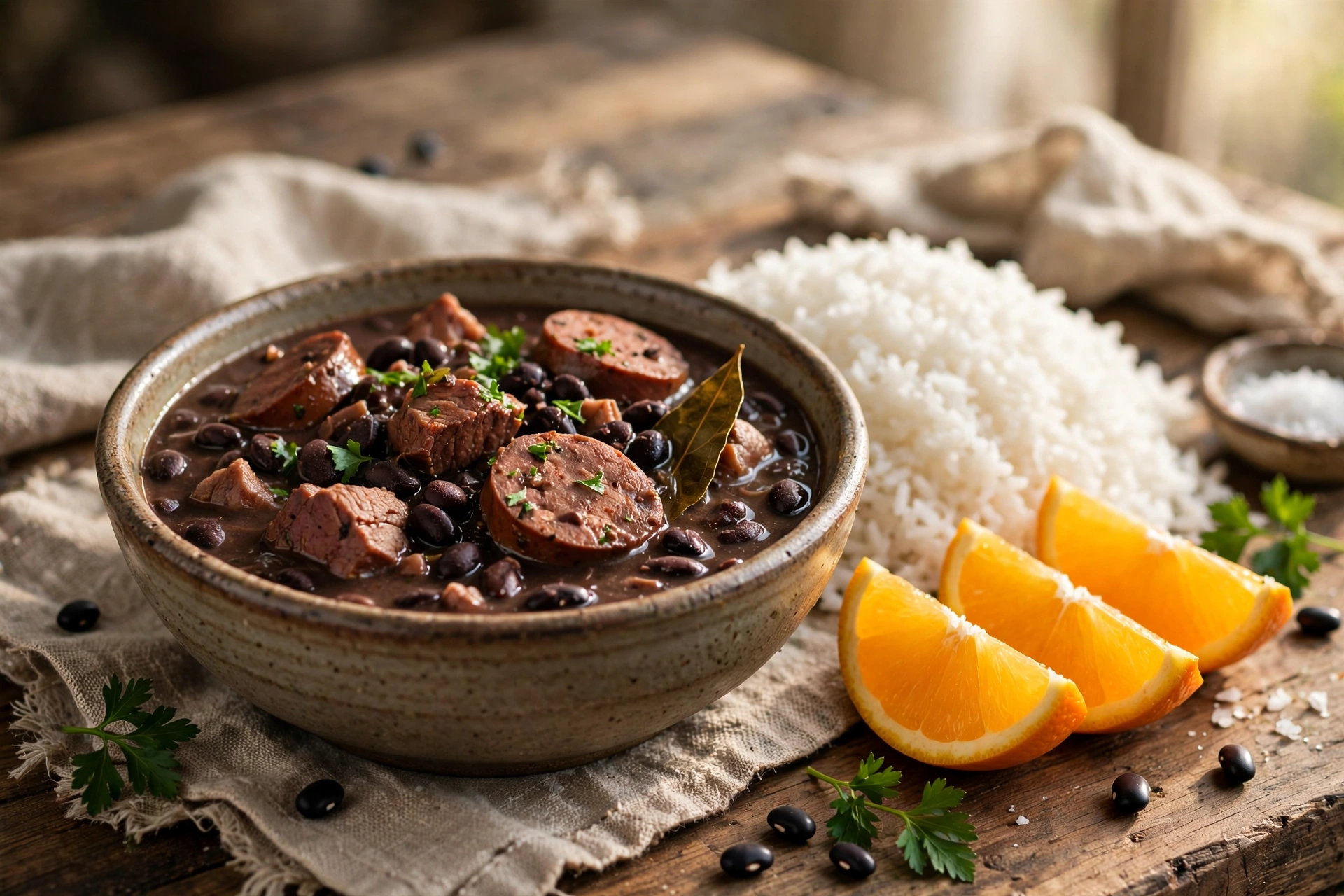
Some dishes are simply dinner. Feijoada is an occasion. This deep, smoky Brazilian black bean stew arrives at the table in a heavy pot, surrounded by bowls of rice, bright orange slices, and crisp greens, and it invites everyone to slow down and stay a while. It is rich without being heavy-handed, and it tastes even better the next day, when the beans have had time to absorb every bit of flavour from the pot.
If you have never made feijoada at home, do not be put off by its reputation as a weekend project. The method is straightforward: soak the beans, brown the meats, then let everything simmer gently until the stew turns thick and glossy. Most of the cooking time is hands-off.
What Is Feijoada?
Feijoada is Brazil’s national dish, a slow-cooked stew of black beans and pork that is traditionally served as a long, leisurely lunch with family and friends. Its roots reach back centuries, to a time when beans, salted pork, and smoked meats were practical, filling foods. Over time, cooks refined those humble ingredients into a dark, savoury stew with layers of smoke, garlic, and bay leaf.
A proper feijoada is not a quick bean soup. The beans should hold their shape but be completely tender, and the cooking liquid should thicken into a sauce that coats a spoon. It is usually served with white rice, sauteed collard greens, orange slices, and farofa, a toasted cassava flour mixture that adds crunch. The oranges are not just a garnish; their fresh acidity cuts through the richness of the pork.
Ingredients for Feijoada
This recipe serves six generously.
- 500 g dried black beans, picked over and rinsed
- 300 g smoked sausage, such as linguica or chorizo, sliced into thick rounds
- 300 g pork shoulder, cut into large chunks
- 200 g smoked bacon, cut into short strips
- 2 tablespoons vegetable oil
- 1 large onion, finely chopped
- 5 garlic cloves, minced
- 2 bay leaves
- 1 teaspoon ground cumin
- 1 teaspoon sweet paprika
- 1.5 litres water, plus more as needed
- 1 tablespoon white vinegar or fresh lime juice
- Salt and black pepper, to taste
- Chopped fresh parsley or coriander, to serve
Dried beans give the best texture and the thickest cooking liquid. Smoked sausage is the most important flavour here, so choose one you enjoy eating on its own. If you cannot find linguica, a good smoked chorizo works well.
How to Make Feijoada
- Soak the beans. Put the black beans in a large bowl, cover them with cold water by about 8 cm, and leave them to soak overnight, or for at least 8 hours. Drain and rinse them well before cooking.
- Brown the meats. Heat the oil in a large, heavy pot over medium-high heat. Add the pork and cook, turning the pieces, until browned on all sides, about 6 to 8 minutes. Add the bacon and sausage and cook for another 4 to 5 minutes, until the bacon starts to crisp.
- Build the flavour base. Lower the heat to medium and add the onion. Cook for 5 minutes, stirring and scraping up the browned bits from the bottom, until the onion is soft and golden. Stir in the garlic, cumin, and paprika and cook for 1 minute more, until fragrant.
- Add the beans and water. Return the meats to the pot. Add the drained beans, the bay leaves, and the water. Bring the pot to a gentle boil, then skim off any foam that rises to the surface.
Simmering and Finishing the Stew
- Simmer slowly. Reduce the heat to low, cover the pot with the lid slightly ajar, and simmer for 1 1/2 to 2 hours. Stir occasionally and add a splash of hot water if the level drops below the beans. The feijoada is ready when the beans are completely tender and the liquid has thickened into a dark, glossy sauce.
- Mash a few beans. Scoop out about a cup of beans with some liquid, mash them with a fork until smooth, and stir the mash back into the pot. Simmer for 10 more minutes.
- Season at the end. Remove the bay leaves. Stir in the vinegar or lime juice, then taste and add salt and pepper as needed. The meats are salty, so season only after the stew is fully cooked.
- Rest before serving. Take the pot off the heat and let the feijoada rest, covered, for 10 to 15 minutes. The flavours settle during this short rest, and the stew thickens a little more.
Tips for the Best Feijoada
Keep the simmer gentle. A rolling boil can break the beans apart, while a slow bubble keeps them intact and creamy. If your beans are older, they may need a little longer; simply keep simmering and test a few beans every 15 minutes until they are soft all the way through. Also, do not rush the browning in step two: those browned edges are where much of the stew’s depth comes from.
Variations to Try
To make a lighter feijoada, use chicken thighs and turkey sausage instead of pork and bacon, and add a little smoked paprika to keep the smoky note. A vegetarian version leaves out the meats and simmers the beans with smoked paprika, cumin, mushrooms, and tomato paste. Add extra heat by serving chilli sauce or fresh chilli on the side, so each person can season their own bowl.
Frequently Asked Questions
Do I have to soak the black beans? Soaking is strongly recommended for the best texture and a shorter cooking time. If you forget, add about 45 minutes to the simmering time and keep an eye on the water level.
Can I make feijoada in a slow cooker? Yes. Brown the meats and cook the onion and garlic as described, then transfer everything to a slow cooker with the soaked beans and water. Cook on low for 6 to 7 hours, or on high for 3 to 4 hours, until the beans are tender, then mash a cup of beans to thicken the stew.
What should I serve with feijoada? The classic plate is white rice, sauteed greens, orange slices, and farofa. Rice soaks up the sauce, greens add freshness, and orange brings a bright contrast to the rich pork and beans.
Serving and Storage
Serve feijoada hot, in wide bowls, with white rice spooned alongside and the greens, orange slices, and farofa in separate dishes so everyone can help themselves. Sprinkle chopped parsley or coriander over the top just before serving.
Store leftovers in an airtight container in the refrigerator for up to 4 days, or freeze them in portions for up to 3 months. Thaw frozen feijoada overnight in the refrigerator, then reheat it gently in a saucepan over low heat, adding a splash of water if it has thickened too much. Cooked rice should be stored separately and reheated until piping hot.
You Might Also Like