What is prosciuttini? It is a small, mild Italian cured ham. In fact, it is a smaller and younger version of prosciutto. The name comes from the Italian word prosciutto, with the ending -ini, which means small. So the name points to little prosciutto.
Food lovers often meet this ham on an antipasto board or in a sandwich. It looks like thin ribbons of pink meat with soft white fat. The taste is soft, mild, and a little salty. This guide explains how makers cure it, how it tastes, and how to serve it at home.
What Is Prosciuttini?
Prosciuttini is a dry-cured ham from Italy. Makers start with a pork leg, salt, and time. They use a smaller leg than they use for a full-size prosciutto. Because the leg is smaller, the ham cures faster and keeps a gentler flavour.
During curing, salt draws water out of the meat. The meat then turns a soft rose pink, and the fat turns creamy white. You can buy this ham sliced very thin, and it is ready to eat. Heat would dry it out, so serve it at room temperature for the best taste.
How Makers Cure Prosciuttini
This ham follows the same basic method as prosciutto crudo, the raw cured ham of Italy. First, makers trim a pork leg and rub it with salt. The salt draws out water and keeps the meat safe while it cures.
Next, the leg rests in a cool room for several weeks. Workers then wash and dry it and move it to an ageing room. There, air moves around the ham for months. A full prosciutto may age for 12 to 24 months, but a smaller leg needs far less time.
Because the cure is shorter, the ham keeps more moisture. It feels softer and less firm than a long-aged prosciutto, and it tastes less intense. For this reason, many people find it a good first step into cured ham.
What Does Prosciuttini Taste Like?
This ham tastes mild, sweet, and lightly salty. It has a soft, silky texture that melts in the mouth. The fat adds a smooth, buttery note, and you may notice a faint nutty hint, much like other Italian cured hams. Yet the taste stays gentle and does not overpower bread, cheese, or fruit.
For the best flavour, take the ham out of the fridge about 20 minutes before you serve it. Cold ham tastes flat, but at room temperature, the fat softens and the flavour opens up. Ask for slices as thin as you can, because thin slices feel softer on the tongue.
Prosciuttini vs Prosciutto
Prosciuttini and prosciutto share the same roots, but they differ in size, age, and strength of flavour. Here is a quick look at the main points.
- Size: This ham comes from a smaller pork leg, while prosciutto comes from a full-size leg.
- Ageing time: The smaller ham ages for a shorter time, while prosciutto often ages for a year or more.
- Flavour: It tastes mild and sweet, while prosciutto tastes deeper, saltier, and more complex.
- Texture: It feels soft and tender, while prosciutto feels firmer and drier.
- Price: It often costs less, because it takes less time to make.
Think of it as the younger, gentler cousin of prosciutto. If you like prosciutto di Parma or prosciutto San Daniele, you will likely enjoy this ham too. It gives you a similar style in a lighter form, and it also differs from cooked ham, speck, and jamon. Cooked ham is paler, speck tastes smoky, and jamon has a stronger, nuttier flavour.
How to Serve It
This ham is easy to serve, and it needs very little work. The key is to keep the pairings simple and let the ham shine.
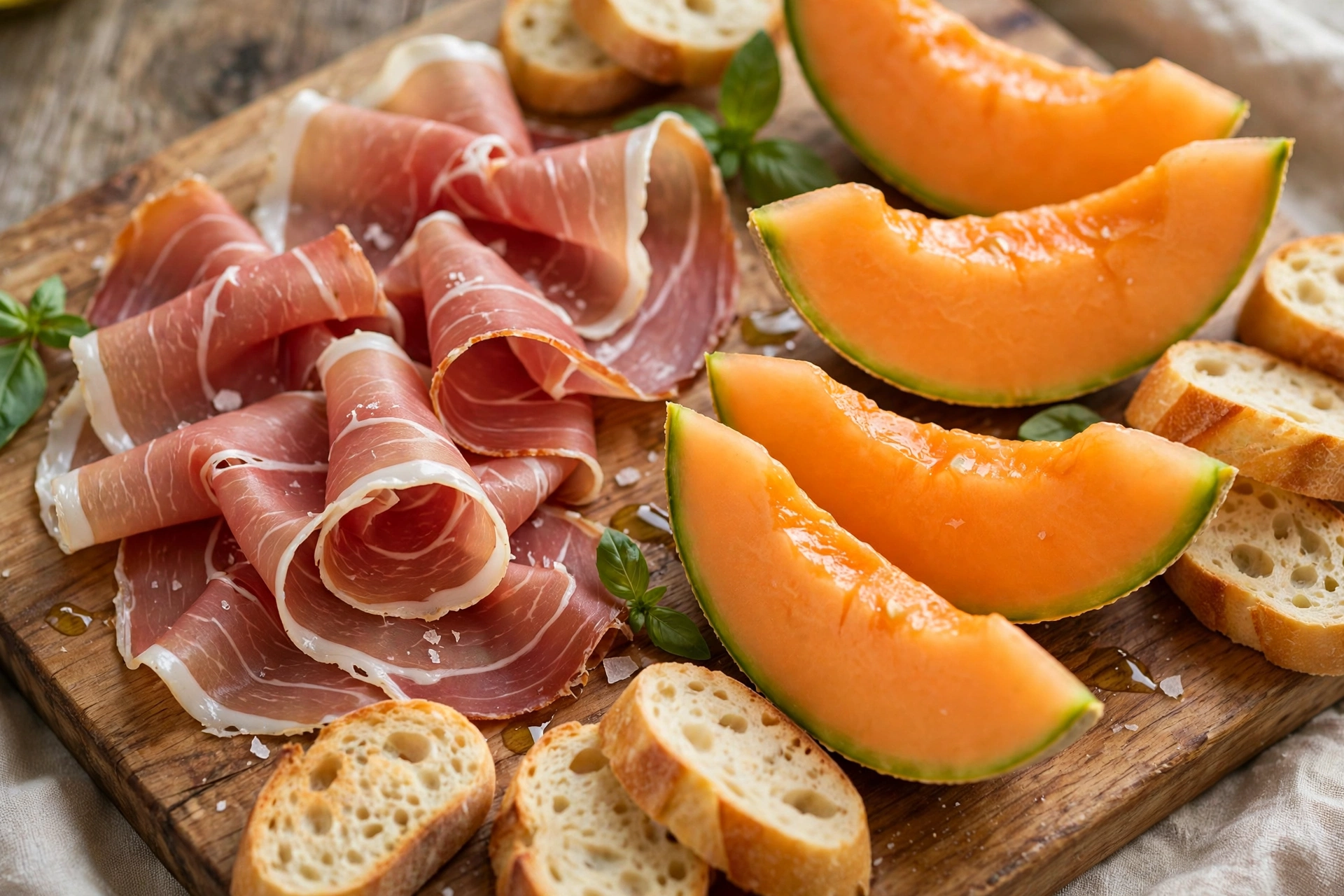
- With melon: Wrap thin slices around cantaloupe or melon wedges. The sweet fruit balances the salt.
- On an antipasto board: Add it with cheese, olives, bread, and fruit for a simple starter.
- In a sandwich: Layer it with fresh mozzarella, tomato, and basil on crusty bread.
- On pizza: Lay slices on a hot pizza just after it leaves the oven, so they warm but do not cook.
- In a salad: Tear it into ribbons and add it to a green salad with figs or pears.
- With pasta: Stir torn pieces into warm pasta with cream, peas, or mushrooms at the end of cooking.
It also pairs well with mild cheese. Try fresh mozzarella, burrata, or a soft goat cheese. Add a drizzle of olive oil and a crack of black pepper, and you have a simple, tasty plate.
Buying and Storing
When you buy this ham, look for slices that are pink, not grey. The fat should look white and clean, and the ham should smell fresh and mild, not sour. If you can, buy it from a deli counter and ask the staff to slice it thin to order.
At home, keep it in the fridge, wrapped well in paper or plastic wrap, or in a sealed box. Use sliced ham within three to four days for the best flavour. An unopened pack will last longer, so check the date on the label. Avoid freezing sliced ham, because freezing changes the texture and makes the slices stick together.
Is It a Healthy Choice?
This ham gives you protein, and it has no added sugar. Like all cured meats, though, it is high in salt and saturated fat. So enjoy it in small amounts as part of a balanced diet.
A small serving with fruit, salad, and whole-grain bread makes a good choice. A large plate of cured meat on its own is less so. If you watch your salt intake, keep portions modest and balance the meal with fresh foods. People who avoid pork, or who follow a low-sodium diet, should skip it.
Frequently Asked Questions
Is it the same as prosciutto?
No. It is a smaller, younger version of prosciutto, made in a similar way but aged for less time. As a result, it tastes milder and feels softer than full-size prosciutto.
Do you need to cook it?
No, you do not need to cook it. Curing makes it ready to eat, so serve it at room temperature. If you add it to a hot dish, add it at the very end, so it only warms through.
What foods pair well with prosciuttini?
Melon, figs, pears, soft cheese, crusty bread, and olives all pair well with this ham. It also works in sandwiches, on pizza, and on an antipasto board. Keep the pairings simple and fresh, and explore more food guides in our Recipes section for other ideas.
Conclusion
So, what is prosciuttini? It is a small, mild Italian cured ham, made like prosciutto but aged for less time. It is soft, sweet, and lightly salty, and it is easy to serve and hard to get wrong.
Try it with melon and bread first. That classic pairing shows off its best side. Then try it in sandwiches, salads, and on pizza. Once you know this ham, you will find many ways to enjoy it.
You Might Also Like