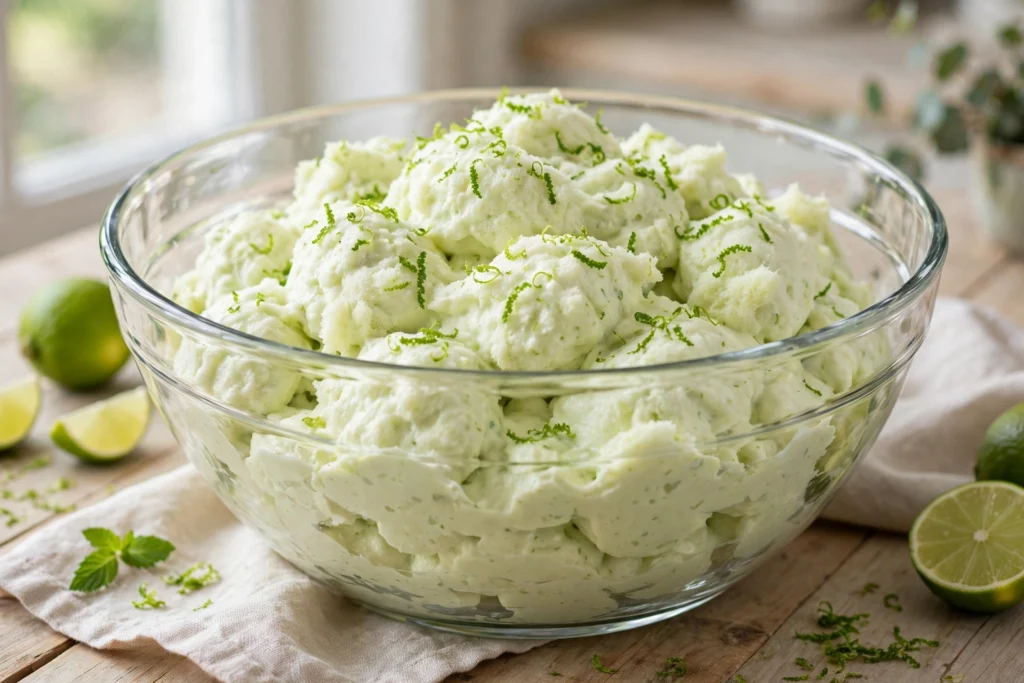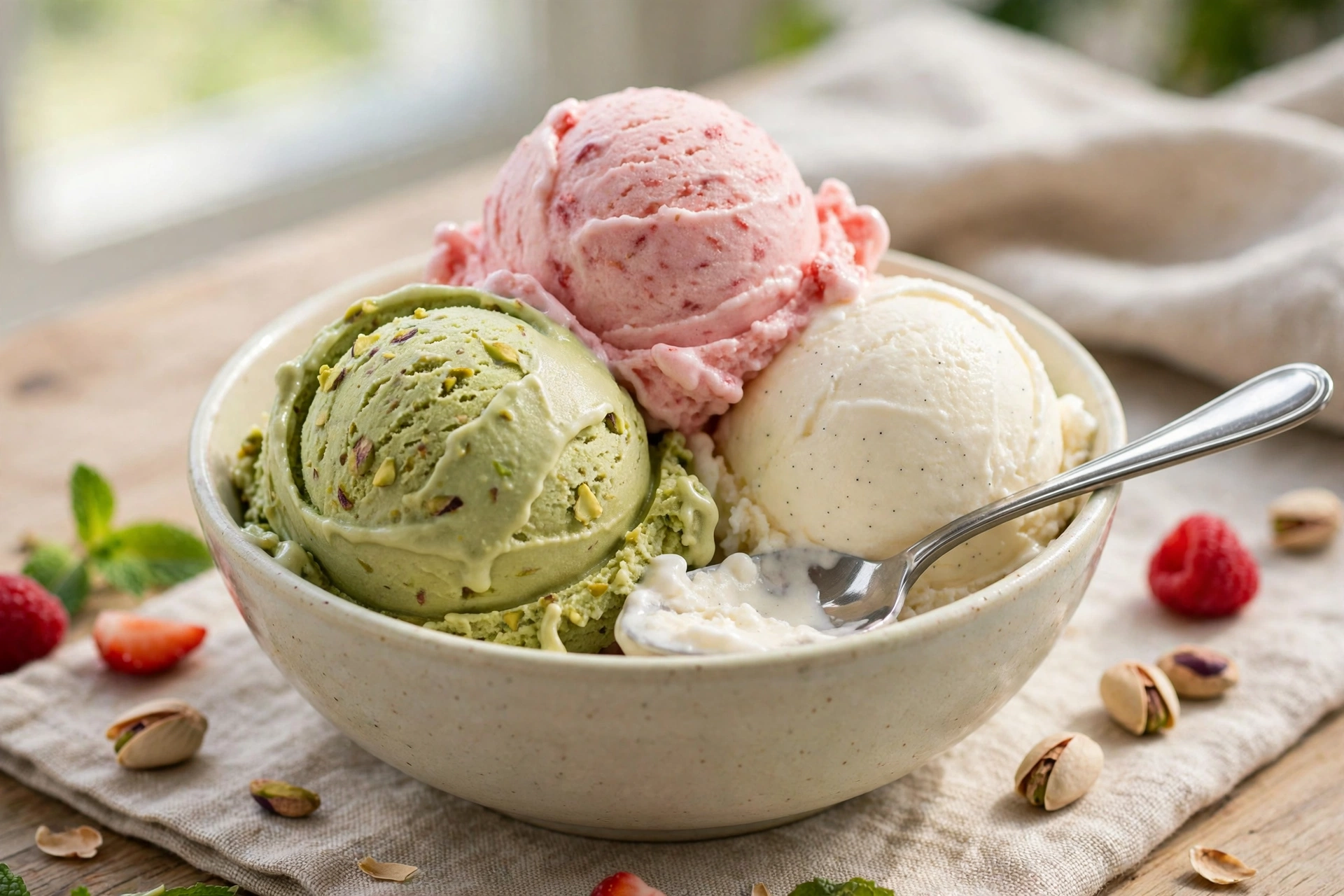
Three scoops of gelato in a bowl. Traditional gelato is made with dairy milk and cream.
Does gelato have dairy? Yes. Traditional gelato has dairy — it is made with milk and cream. However, it usually has less cream than ice cream, and it has no egg yolks. In addition, dairy-free versions exist, so you can still enjoy a scoop if you skip milk.
This Italian dessert is churned slowly, so it has less air and a denser, silkier texture. It is also served a little warmer than ice cream, so the flavor comes through more. For example, a spoonful melts fast on your tongue and tastes rich, even though it has less fat.
In this guide, you will learn what dairy is in gelato, how it compares with ice cream, and which dairy-free options are worth trying. In addition, you will find answers to the most common questions about this dessert and dairy.
Does Gelato Have Dairy?
So, does gelato have dairy? Yes, the classic version does. The base is whole milk and cream, plus sugar and flavorings such as vanilla, chocolate, or pistachio. Some shops also add a little milk powder for a smoother texture. In short, if it is made the traditional way, it has dairy.
The amount of dairy is smaller than in American ice cream. This dessert uses more milk and less cream, so the fat content is lower. For example, it has about 4 to 8 percent fat, while ice cream often has 14 to 18 percent. In addition, the classic version has no egg yolks, while many ice creams use yolks for richness.
That said, not every scoop is the same. Some shops use extra cream, and some use egg yolks for a richer base. For this reason, always ask the shop or check the label if dairy matters to you.
What Dairy Is in Gelato?
Most scoops start with whole milk and heavy cream. The milk gives it body, and the cream adds richness. Some recipes also use milk powder, which makes the texture smooth and helps it hold its shape. In addition, a few flavors use butter or mascarpone for extra creaminess.
Lactose is the sugar in milk, so the classic version has lactose too. If you are lactose intolerant, a small serving may still be fine for you, but a large cone could cause trouble. For this reason, many shops now offer lactose-free or dairy-free scoops. Also, sorbetto, the Italian fruit sorbet, has no dairy at all.
Gelato vs. Ice Cream: A Side-by-Side Comparison
The two desserts look alike, but they are made in different ways. The table below shows the main differences at a glance.
| Feature | Gelato | Ice Cream |
|---|---|---|
| Base | Milk and cream | Cream and milk, often with egg yolks |
| Fat content | About 4 to 8 percent | About 14 to 18 percent |
| Air | Less air, dense and silky | More air, light and fluffy |
| Serving temperature | Served a little warmer | Served colder |
| Egg yolks | Usually none | Often used |
| Texture | Dense, smooth, and intense | Light, creamy, and mild |
As you can see, this dessert is denser and less fatty than ice cream. It is churned slowly, so less air gets whipped in. In addition, it is served warmer, so it melts faster and tastes more intense.
Dairy-Free Gelato Options
Dairy-free options are easy to find now. Many shops make them with coconut milk, almond milk, or oat milk instead of cow’s milk. For example, coconut milk gives a rich, creamy base that works well with chocolate and coffee. Oat milk is mild, so it lets fruit flavors shine.
Sorbetto is the safest bet. It is made with fruit, sugar, and water, so it has no dairy at all. In addition, many sorbettos are vegan and gluten-free. However, always check the label, because some fruit flavors may share equipment with dairy scoops.
How to Spot Dairy-Free Gelato
First, look for the words ‘dairy-free’ or ‘vegan’ on the label or menu. Then, ask the staff about the base. A good shop can tell you if a flavor uses milk, cream, or a plant base. In addition, check the allergen list, which should note milk and lactose.
Can You Eat Gelato If You Are Lactose Intolerant?
It depends on how sensitive you are. The classic version has less lactose than ice cream, because it uses more milk and less cream. For example, some people with mild lactose intolerance can enjoy a small cup with no trouble. However, if you are very sensitive, choose a dairy-free scoop or sorbetto instead.
Also, you can take a lactase tablet before you eat, if your doctor says it is fine. In addition, lactose-free milk gelato is now sold in many shops. So, does gelato have dairy? The classic version does. Lactose-free milk gelato still has dairy, but the lactose is removed, so it is easier to digest.
Frequently Asked Questions
Does gelato have dairy milk?
Yes, the classic version has milk. Whole milk is the main base, along with a little cream. If you need a milk-free scoop, look for dairy-free flavors made with coconut, almond, or oat milk.
Is dairy-free gelato vegan?
Dairy-free gelato is often vegan, since it is made with plant milks or fruit sorbetto. However, some dairy-free flavors may still use honey or egg whites. Always check the label to be sure.
Does gelato have eggs?
Usually, no. The classic version has no egg yolks, which is one way it differs from ice cream. That said, a few shops add yolks for richness, so ask if eggs are a concern for you.
Is gelato gluten-free?
Most scoops are gluten-free, because the base is milk, cream, and sugar. However, flavors with cookies, cake, or brownie pieces may have gluten. In addition, cones often have wheat, so choose a cup if you need a gluten-free treat.
How is sorbet different?
Sorbet, or sorbetto, is made with fruit, sugar, and water. It has no dairy and no eggs. Gelato, on the other hand, is made with milk and cream, so it is richer and creamier.
Try These Next
- Banana Juice Recipe — an easy, creamy, and refreshing drink for warm days.
- Mom’s Zucchini Bread — a moist, warmly spiced loaf for the breakfast table.
- Egg Scramble — a fluffy, creamy scramble for the brunch table.
- Gluten Free Cream of Chicken Soup — a creamy, cozy soup for busy weeknights.
You Might Also Like