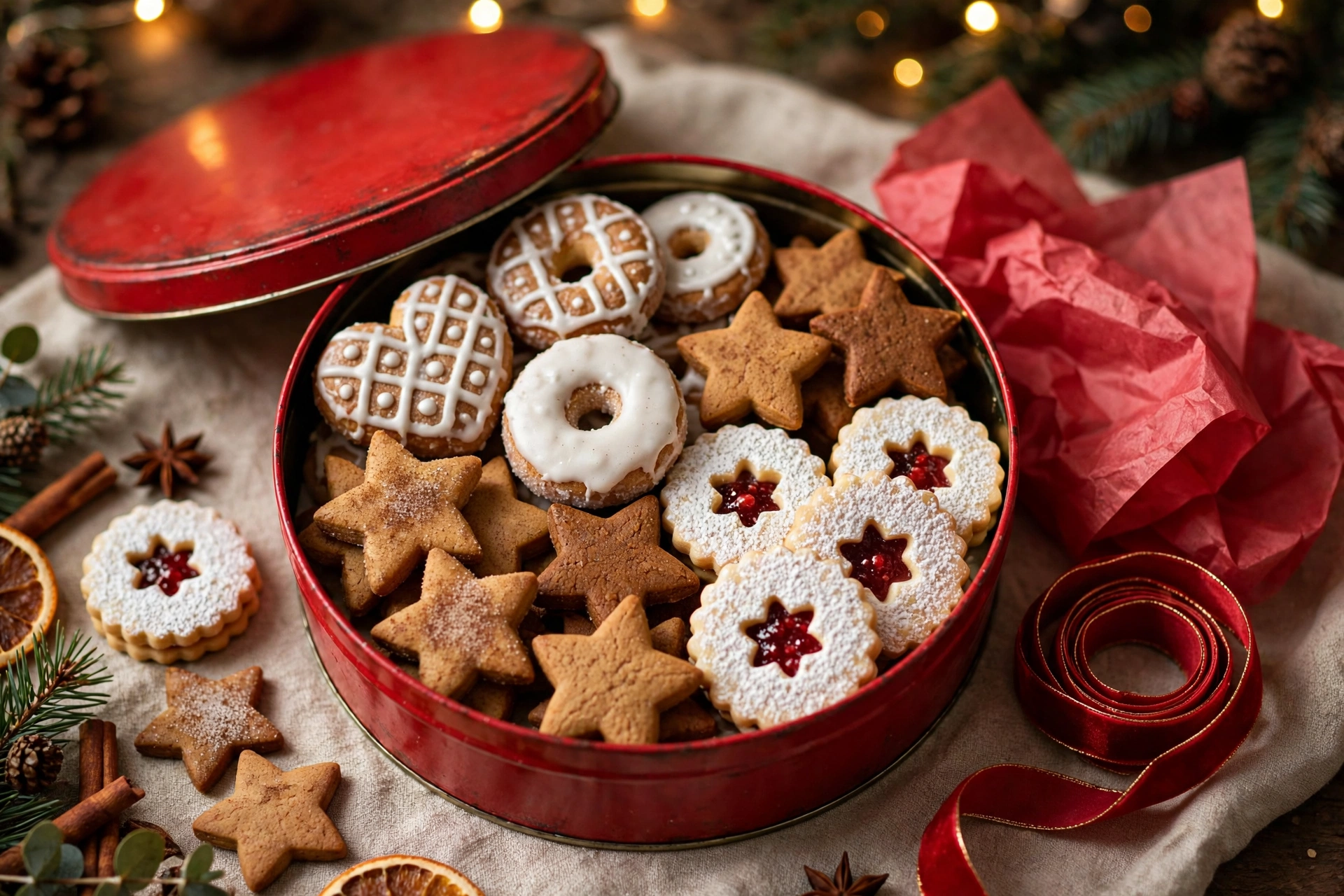
European Christmas cookies are the best part of December baking. Every country has its own star. Germany has soft lebkuchen. Italy has crisp pizzelle. Sweden has thin pepparkakor. Austria has jam-filled linzer cookies.
This guide brings them together in one place. You get a full recipe for soft German lebkuchen, plus a tour of the other classics. Bake one batch, or bake a whole cookie tray. Either way, your kitchen will smell like Christmas.
Why You’ll Love It
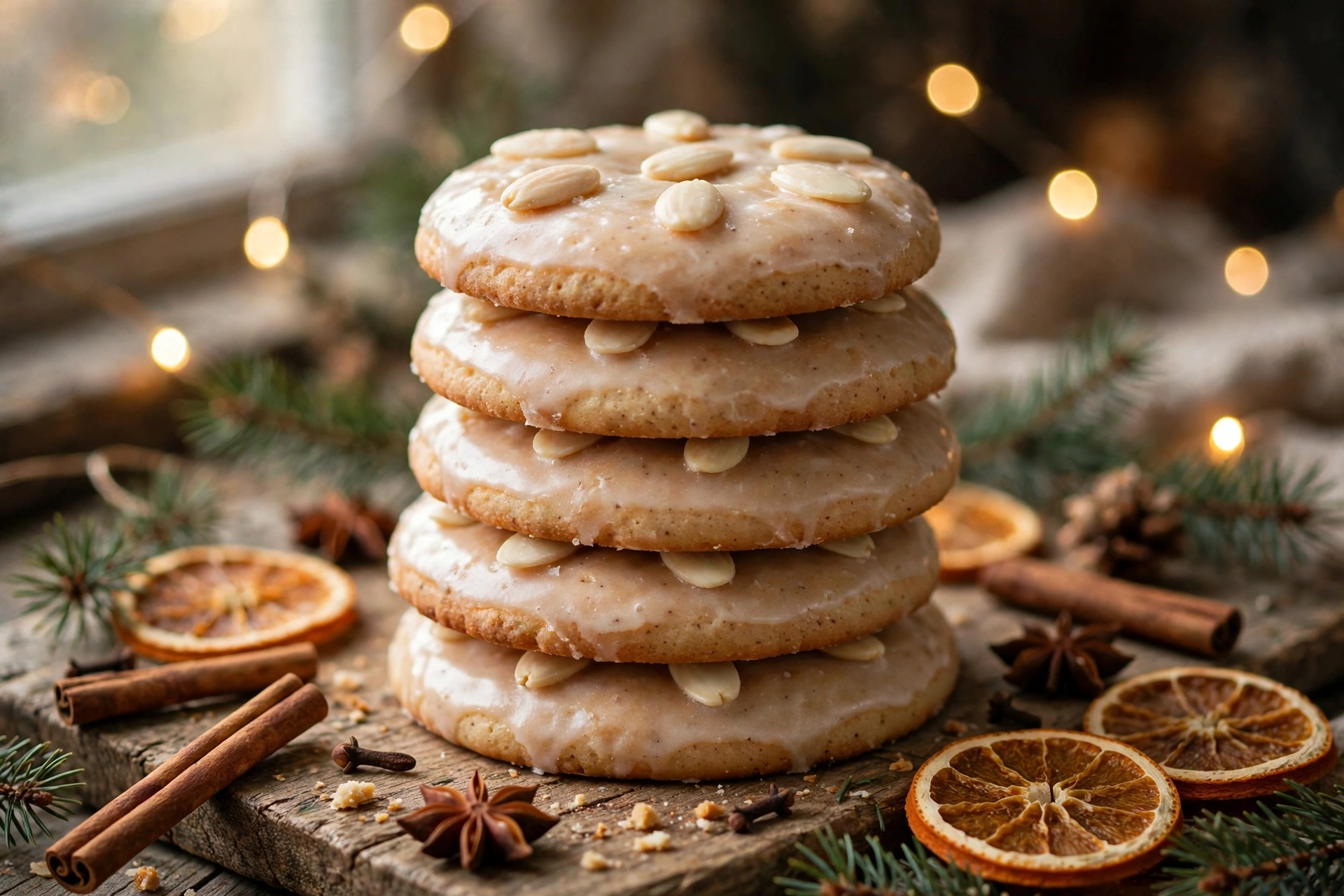
These European Christmas cookies are soft, spiced, and made to share. The lebkuchen stay moist for days. That makes them perfect for gifts and cookie swaps.
You do not need special tools. There is no cookie cutter and no piping bag. You roll the dough into balls with your hands. The glaze does the decorating for you.
The recipe is forgiving too. The honey keeps the cookies soft. The nuts add richness. The spices do the heavy lifting on flavor. Even a first-time baker can get this right.
Best of all, one batch makes 24 cookies. That is enough for a tin, a tray, and a few warm ones straight from the oven.
Ingredients
Everything here is easy to find. Ground almonds and hazelnuts are in most baking aisles now. Candied orange peel is the one item worth hunting down. It gives lebkuchen its classic flavor.
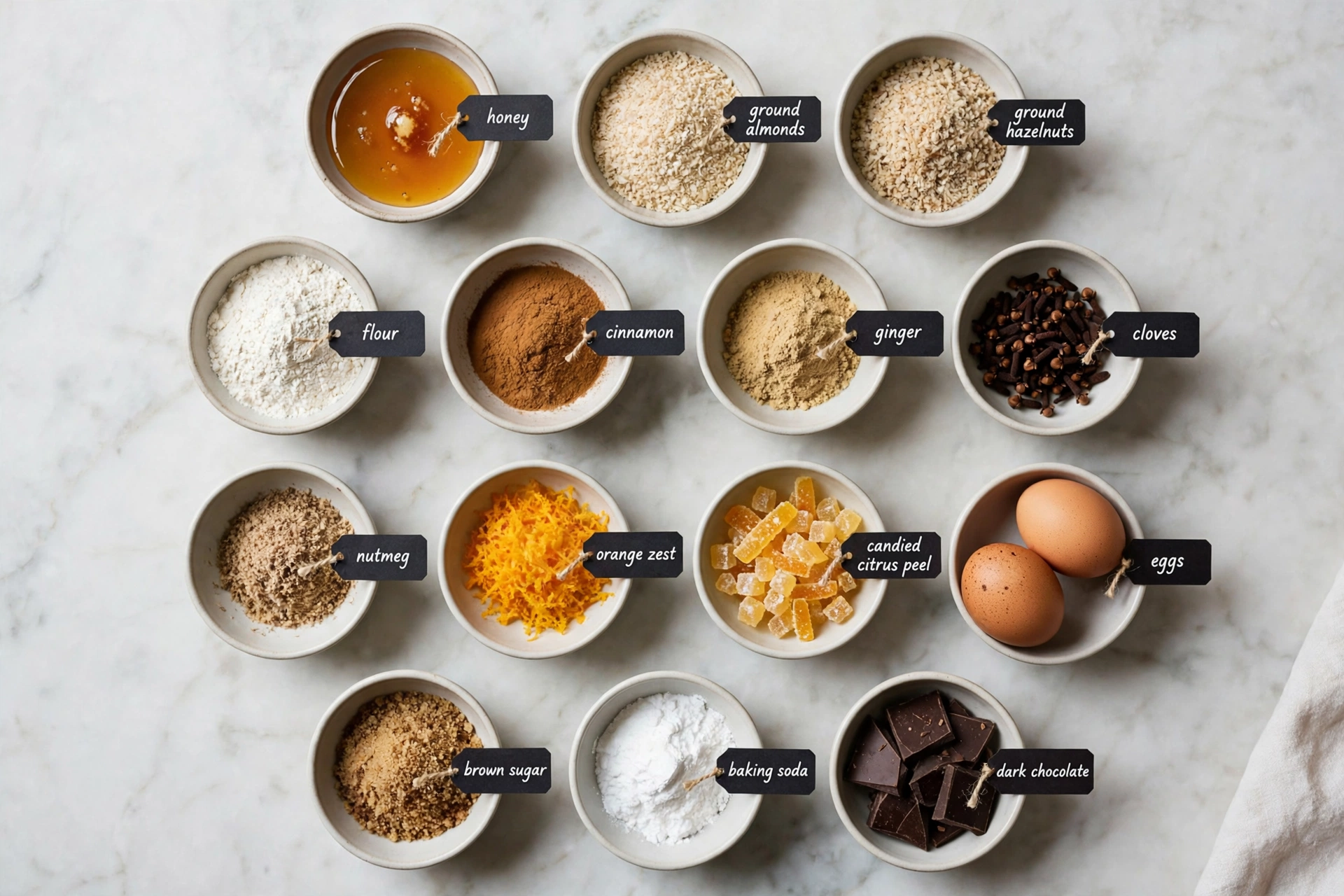
- 2 cups all-purpose flour
- 1 cup ground almonds
- 1/2 cup ground hazelnuts
- 1 tsp baking soda
- 2 tsp ground cinnamon
- 1 tsp ground ginger
- 1/2 tsp ground cloves
- 1/4 tsp ground nutmeg
- 1/4 tsp ground cardamom
- 1/2 tsp salt
- 2 large eggs
- 3/4 cup honey
- 1/2 cup brown sugar, packed
- 1 tsp vanilla extract
- 1 tsp orange zest
- 1/4 cup candied orange peel, finely chopped
- 24 blanched almonds, halved, for topping
- For the glaze: 1 cup powdered sugar, 2 tbsp water, 1/2 tsp vanilla extract
How to Make Lebkuchen
The dough comes together in one bowl. Then it rests in the fridge for 30 minutes. That rest makes the dough easy to roll. Do not skip it.
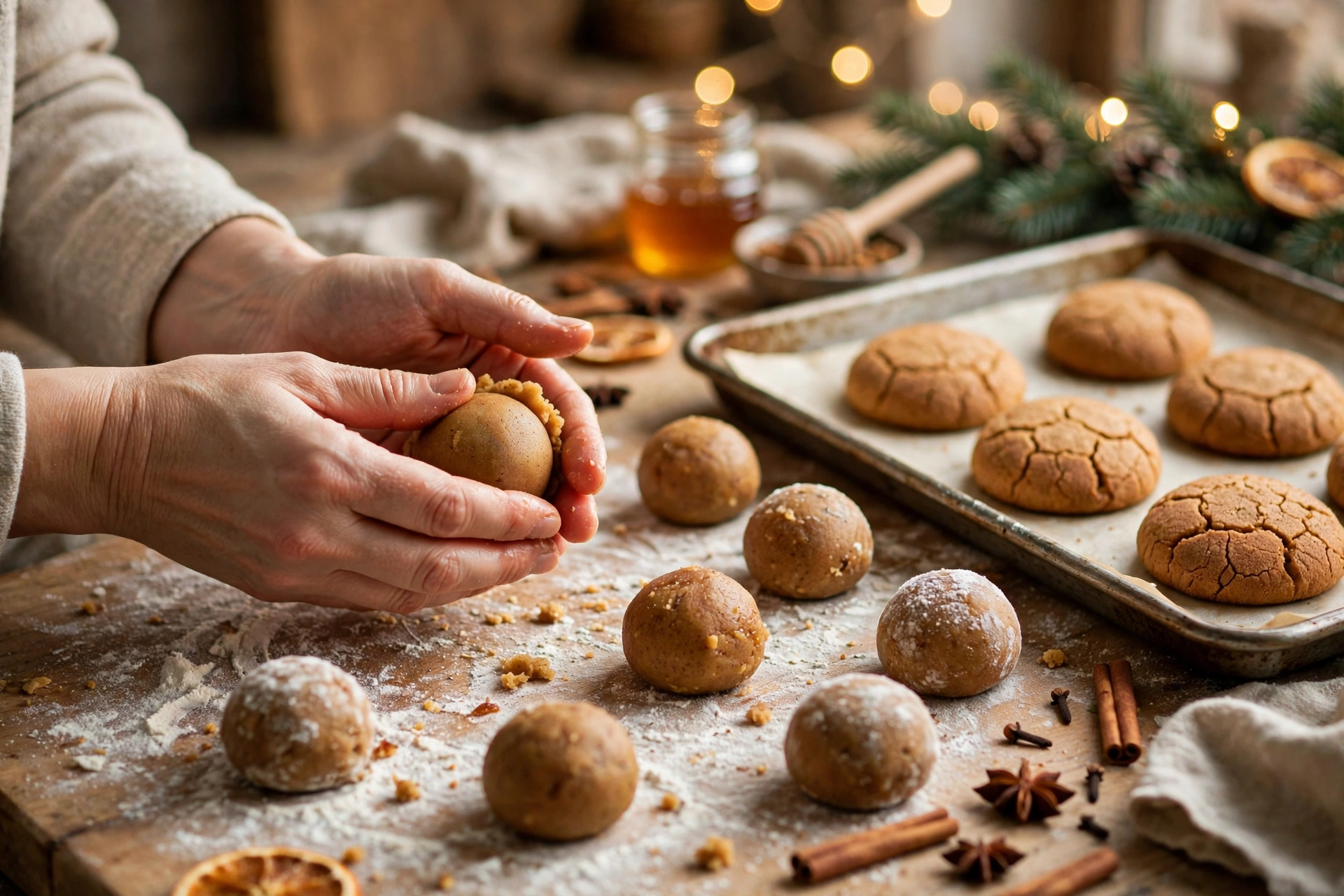
- Whisk the dry ingredients. Add the flour, ground almonds, ground hazelnuts, baking soda, cinnamon, ginger, cloves, nutmeg, cardamom, and salt to a large bowl. Whisk until they are fully mixed.
- Beat the wet ingredients. In a second bowl, beat the eggs, honey, brown sugar, vanilla, and orange zest. Beat for about 2 minutes. The mix should look smooth and a little thick.
- Mix wet into dry. Pour the wet mix into the dry mix. Stir in the candied orange peel. Stir until no dry flour shows. The dough will be soft and sticky. That is normal.
- Chill the dough. Cover the bowl with plastic wrap. Chill it in the fridge for 30 minutes. The dough firms up and gets much easier to roll.
- Roll and top. Heat the oven to 350°F (175°C). Line two baking sheets with parchment paper. Wet your hands lightly. Roll the dough into 24 balls, about 1 1/2 tablespoons each. Place them 2 inches apart. Press a halved almond on top of each one. Flatten each ball just a little.
- Bake. Bake for 12 to 15 minutes. The edges should look set. The centers should still look soft. Let the cookies cool on the tray for 5 minutes. Then move them to a wire rack.
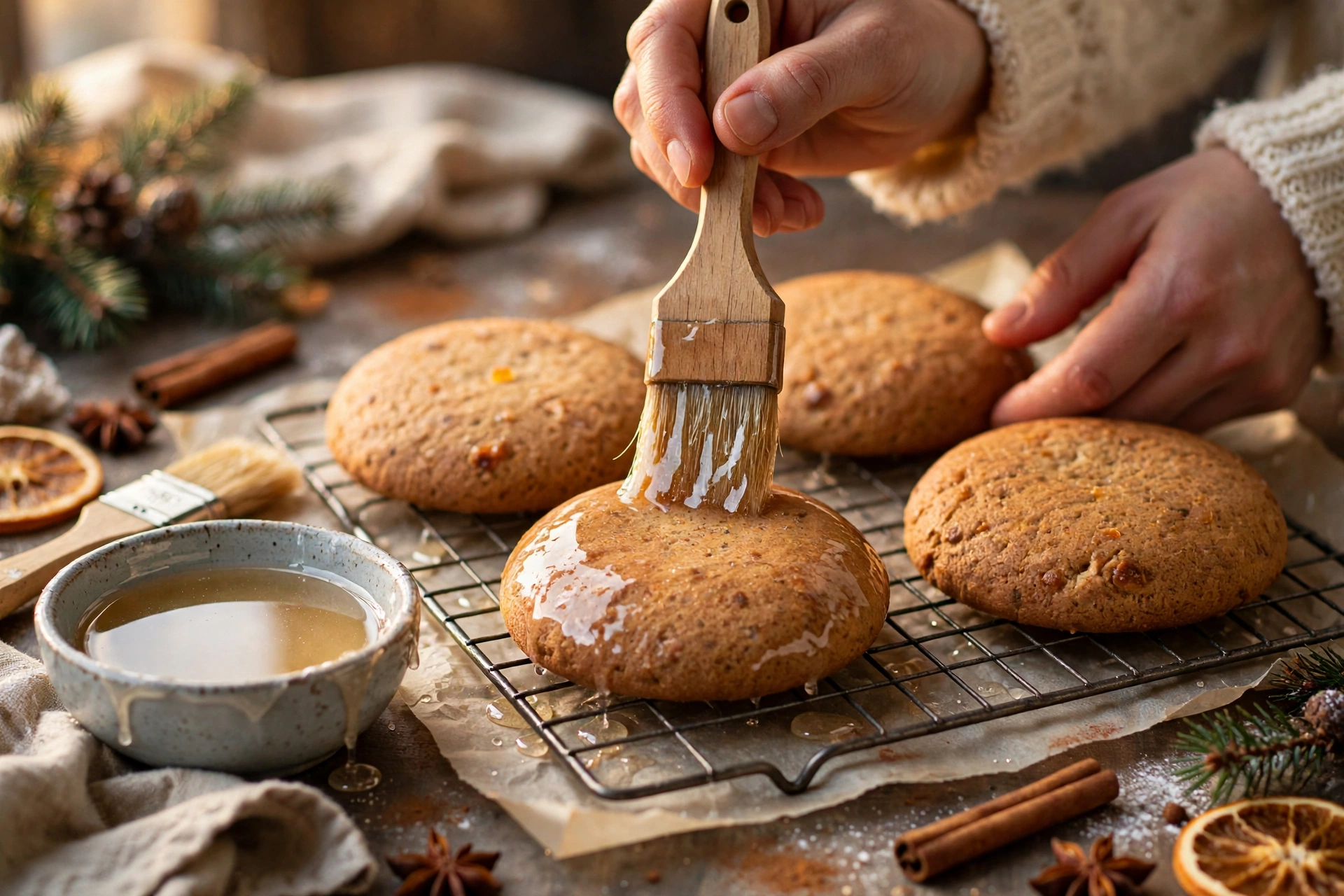
- Glaze while warm. Whisk the powdered sugar, water, and vanilla until smooth. Brush the glaze over the warm cookies. Let it set for 20 minutes before you stack or store them.
More European Christmas Cookies to Try
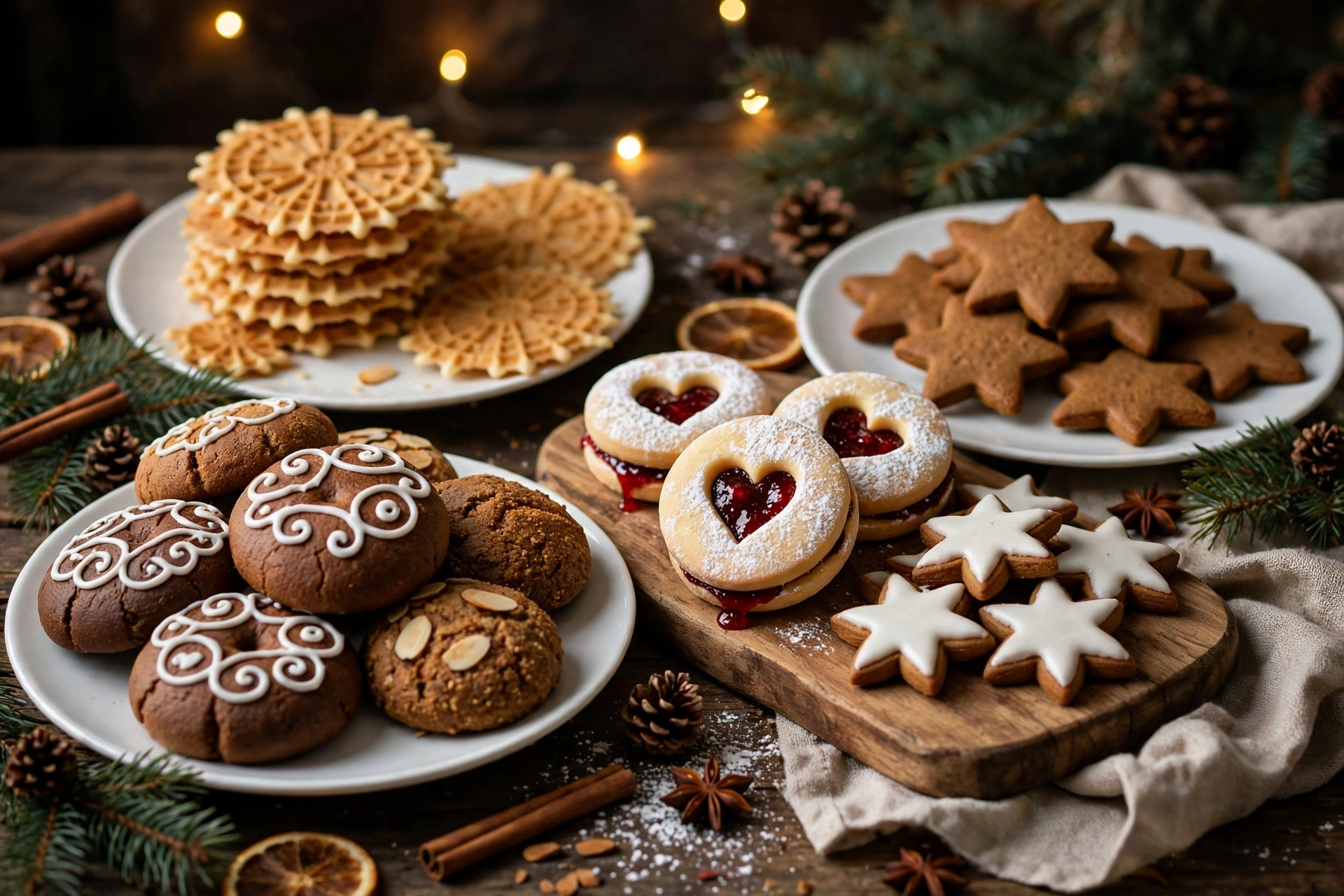
Lebkuchen is only the start. European Christmas cookies fill a whole tray with different flavors and textures. Here are the classics worth knowing. Each one has its own country, its own story, and its own place on the cookie plate.
Pizzelle (Italy)
Pizzelle are thin, crisp waffle cookies from Abruzzo. They are baked in a patterned iron. Most families flavor them with anise or vanilla. They are light and lacy. They pair well with coffee after dinner.
Pepparkakor (Sweden)
Pepparkakor are thin, snappy ginger cookies. They are spiced with cinnamon, cloves, and cardamom. Swedish families cut them into hearts and stars. Kids build gingerbread houses from the same dough. They are the crisp contrast to soft lebkuchen on a mixed tray.
Zimtsterne (Germany)
Zimtsterne are German cinnamon stars. They are made with ground almonds and no flour. A white meringue glaze tops each star. They are crisp outside and soft inside. They are a natural gluten-free option for a mixed cookie plate.
Linzer Cookies (Austria)
Linzer cookies are hazelnut or almond shortbread sandwiches. They hold a spoonful of raspberry jam. A cut-out window on top shows the red jam. A dusting of powdered sugar finishes them like snow. They look fancy, but they are simple to make.
Vanillekipferl (Austria)
Vanillekipferl are delicate crescent cookies. They are made with walnuts or almonds. They are rolled in vanilla sugar while still warm. They crumble a little at the first bite. That is part of their charm.
Speculaas (Netherlands)
Speculaas are thin, deeply spiced cookies. They are pressed into carved wooden molds. Each cookie carries a picture, often a windmill or a figure. The spice mix is close to lebkuchen, so the two sit well together on one tray.
If you want more Christmas baking from this site, try the gingerbread loaf with cream cheese frosting. Or make a batch of gingerbread kiss cookies for the kids. Both pair well with a tray of European Christmas cookies.
Helpful Tips
➤ Let the cookies rest a day before serving. The flavor gets deeper and the texture gets softer.
➤ Weigh the honey if you can. Honey is sticky and hard to measure in a cup. A scale keeps the dough right.
➤ Use fresh spices. Old cinnamon tastes flat. If your spices are over a year old, buy new ones for this recipe.
➤ Do not crowd the tray. The cookies spread a little as they bake. Give them 2 inches of space.
➤ Glaze in small batches. The glaze sets fast on warm cookies. Brush four or five at a time.
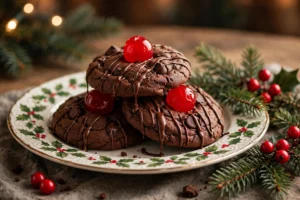
➤ For a chocolate version, dip half of each cooled cookie in melted dark chocolate. Let it set on parchment paper.
Variations
Chocolate lebkuchen: Dip the glazed cookies in dark chocolate. Or stir 1/4 cup cocoa powder into the dry ingredients. Both versions are rich and festive.
Nut-free lebkuchen: Swap the ground almonds and hazelnuts for extra flour and 1/2 cup finely ground oats. The texture will be a little firmer, but the spice flavor still shines.
Orange glaze: Swap the water in the glaze for fresh orange juice. Add a little extra zest. The citrus lifts the warm spices.
Mini lebkuchen: Roll the dough into smaller balls, about 1 tablespoon each. Bake for 10 to 12 minutes. You will get about 36 small cookies. They are perfect for cookie swaps.
What to Serve
Serve lebkuchen with hot drinks. Coffee, spiced tea, and hot cocoa all work. The cookies are sweet and spiced, so a plain drink balances them best.
For a dessert table, pair them with something creamy. A bowl of rice pudding with cinnamon is a lovely match. The cool creaminess plays against the warm spice of the cookies.
For a full cookie tray, add Christmas sugar cookies and Christmas tree cookies with royal icing. The soft lebkuchen, the buttery sugar cookies, and the crisp iced trees give guests three textures to choose from.
Storage
Store lebkuchen in an airtight tin at room temperature. They keep well for up to 2 weeks. In fact, they taste better after a day or two.
To keep them soft, add a slice of apple or a small piece of bread to the tin. Swap it out every two days. The cookies pull moisture from it and stay chewy.
To freeze, place the unglazed cookies in a single layer in a freezer bag. They freeze well for up to 3 months. Thaw them at room temperature, then glaze them fresh. Glazed cookies can be frozen too, but the glaze may crack a little.
For gifting, pack a mix of cookies in a tin with tissue paper. Add a ribbon and a small card. A tin of European Christmas cookies is a gift people remember.
Frequently Asked Questions
What are the most popular European Christmas cookies?
The most loved are German lebkuchen, Italian pizzelle, Swedish pepparkakor, German zimtsterne, Austrian linzer cookies and vanillekipferl, and Dutch speculaas. Each country has its own favorite, but these six show up on cookie trays across all of Europe.
What is the difference between lebkuchen and gingerbread?
Lebkuchen are soft, cake-like honey cookies made with nuts and no butter. Gingerbread is usually firmer and made with molasses and butter. Lebkuchen stay soft for weeks. Gingerbread is often crisp enough to build with.
Do European Christmas cookies keep well?
Yes. Most of them were made to last. Lebkuchen keep for 2 weeks in a tin. Pepparkakor and speculaas keep for 3 to 4 weeks. Pizzelle keep for weeks in a dry tin. Freeze the dough or the baked cookies for up to 3 months.
Can I make lebkuchen ahead of time?
Yes, and you should. Bake them one or two days before you serve them. The flavor gets better as the cookies rest. You can also make the dough a day ahead and keep it in the fridge.
Are lebkuchen gluten-free?
This recipe is not gluten-free because it uses all-purpose flour. Traditional Nuremberg lebkuchen, called Elisenlebkuchen, use almost no flour at all. For a gluten-free version, try zimtsterne instead. They are made with ground almonds and no flour.
What should I put on a European Christmas cookie tray?
Mix soft and crisp cookies. Add lebkuchen for soft spice, pepparkakor for crisp spice, linzer cookies for jam and nuts, and pizzelle for something light. Four or five kinds is plenty. Add a few candied orange slices for color.
Try These Next
Keep the Christmas baking going with more from this site. The gingerbread kiss cookies are quick and kid-friendly. The Christmas sugar cookies are soft, buttery cut-outs. The Christmas tree cookies with royal icing are the prettiest on the tray.
For something rich, try the cherry chocolate cookies. For a festive bake to slice, the gingerbread loaf with cream cheese frosting is a winner. And the apple strudel with maple glaze makes a lovely Christmas dessert.
European Christmas cookies are more than a recipe. They are a tradition that crosses borders. Bake the lebkuchen, try the classics, and fill a tin to share. Your December will taste better for it.
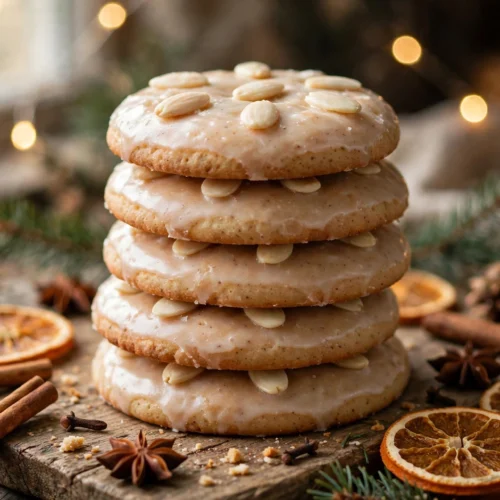
Soft German Lebkuchen (European Christmas Cookies)
Ingredients
- 2 cups all-purpose flour
- 1 cup ground almonds
- 1/2 cup ground hazelnuts
- 1 tsp baking soda
- 2 tsp ground cinnamon
- 1 tsp ground ginger
- 1/2 tsp ground cloves
- 1/4 tsp ground nutmeg
- 1/4 tsp ground cardamom
- 1/2 tsp salt
- 2 large eggs
- 3/4 cup honey
- 1/2 cup brown sugar packed
- 1 tsp vanilla extract
- 1 tsp orange zest
- 1/4 cup candied orange peel finely chopped
- 24 blanched almonds halved, for topping
For the glaze
- 1 cup powdered sugar
- 2 tbsp water
- 1/2 tsp vanilla extract
Instructions
- Whisk the dry ingredients.
- Beat the eggs, honey, and sugar.
- Mix wet into dry.
- Chill the dough 30 minutes.
- Roll into balls and top with almonds.
- Bake 12–15 minutes.
- Glaze while warm.
Notes
You Might Also Like