

Easy Authentic Mapo Tofu with Spicy Sichuan Sauce
Craving the bold, fiery flavors of your favorite Sichuan restaurant? This authentic Mapo Tofu brings that unforgettable restaurant-style experience straight to your kitchen. Tender cubes of silken tofu are coated in a rich, spicy sauce with savory ground pork, aromatic garlic, ginger, and the signature tingly sensation of Sichuan peppercorns.
Every spoonful delivers a delicious balance of heat, fragrance, and savory goodness that makes it hard to stop eating. Whether you already love traditional Chinese food or are ready to explore something new, this dish is sure to impress.
You can serve it alongside a bowl of steamed rice, and you have a comforting, flavor-packed meal that turns an ordinary dinner into something truly special.
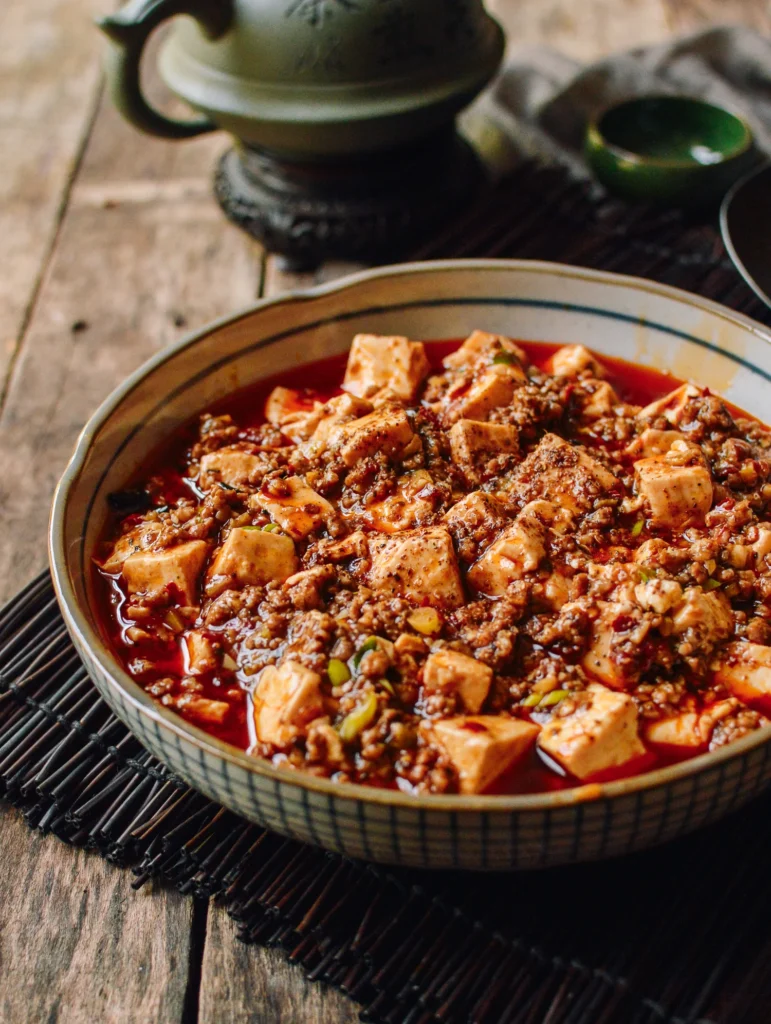
What is Mapo Tofu?
Mapo Tofu is a popular Chinese dish from Sichuan Province, where spicy food is king and the signature spice of the region––the Sichuan Peppercorn––gives dishes a unique “numbing” effect. It’s almost like the Sichuan peppercorns are there not only to add their fragrance and flavor, but also to numb your tongue so it can take more heat!
The name of the dish roughly translates to “pockmarked grandma’s tofu.” Whatever its origins, mapo tofu has made it out of Sichuan Province and spread around the world. The dish has taken on many forms as restaurants and takeout joints have put their own spin on it, often lessening spice levels, adding different vegetables, and transforming the dish into something else entirely!
Traditional and authentic Sichuan mapo tofu is what we’re going for in this recipe. The spicy sauce coats the soft cubes of silken tofu, tasty bits of ground pork, scallion, and Sichuan (or Szechuan) peppercorns.
Getting That Restaurant Taste At Home
I know as well as the next foodie how difficult it can be to approximate restaurant favorites at home, so if you’ve never tried one of our recipes, you may be thinking, “What a load of panda poop! Is this just another so-called ‘authentic’ dish?”
Not so, my friends—we don’t play around at The Woks of Life. If we say authentic, you better betchyo pineapple buns that it’s gonna turn out authentic. Plus, the backstory of this recipe says it all.
It was the summer after my freshman year of college, and I was spending it in Beijing with my parents and sister. It was a hot and smoggy day, which meant “rainy day” activities that didn’t require venturing out into the noxious Beijing air.
I was parked in my parents’ bedroom, flipping through the channels of countless historical dramas (you can literally go through ten straight channels, and each time the screen changes, you’ll see actresses in traditional dress, fighting back tears in disturbingly clear HD), Chinese nature documentaries (run little deer, ruuuun!), and mindless extended infomercials for the best Chinese dried dates you’ll ever taste, or your money back guaranteed (…or not).
Anyways, I was knocked out of my stupor when my limited Chinese vocabulary was able to detect that the latest cooking program I had settled on was featuring a professional chef explaining how to make Mapo Tofu the right way.
For the next 2 minutes, my eyes were glued to the screen, brain straining to understand just what the heck he was saying. Right after it was over, I scrambled to find a pen and paper to write down what I had seen and heard. After that, and much testing/consulting with my family’s taste buds, here’s the finished product!
Adjusting the Recipe
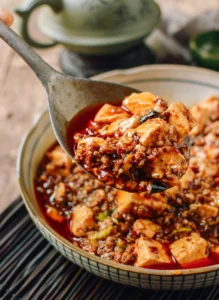
Feel free to adjust this recipe to your own preferences. While we worked on making this recipe as close to what is served in Sichuan restaurants across China and here in New York, recipes can be deeply personal and therefore adjusted to your liking.
Avoiding Sichuan peppercorn overload
Sichuan peppercorns vary widely in quality (and in numbing strength). Since I first posted this recipe way way way back in 2014, Sichuan peppercorns have entered the mainstream, which means it’s a lot easier to find fresh, high-quality ones. Also, my cooking equipment got a lot more advanced (I used to smash my peppercorns in a Ziploc bag with a rolling pin in my cramped college apartment kitchen).
That said, the fresher the peppercorns, the more powerful their numbing effect will be. If your peppercorns are extremely fresh or high quality, you should consider reducing the amount of peppercorns within the range we call for in this recipe according to your own tastes!
What’s more, some folks over the years complain of bitterness. I’ve realized over the years that the reason is threefold:
- Some peppercorns are lower quality and come with a bitter black seed. Definitely avoid those! The husk is where the flavor is.
- The second cause for bitterness is accidentally burning your Sichuan peppercorns during the frying process. Err on the side of caution there—we’ve updated the recipe to add the peppercorns in after the cooked pork is already in the wok (see Step 2 of the recipe card).
- At some point, more peppercorns, yes, will result in a stronger numbing sensation (which we know some of you all are junkies for), but can also give the dish a stronger, more herbal and bitter undertone. If you want a milder Sichuan peppercorn flavor, you can start off with as little as 1/2 teaspoon to 1 teaspoon.
You’ve all spoken, and we’ve heard! Consider yourselves informed!
Now, let’s say that the wok fire is off and you’ve plated your dish, you forgot to do a taste test, and you’re disappointed that you’ve been overly conservative with your Sichuan peppercorn! Sprinkle some extra over the top and stir it in for a quick fix. We call for it as a garnish, but there’s no reason why you can’t use it at your discretion, too.
Ingredients to make authentic Mapo Tofu!
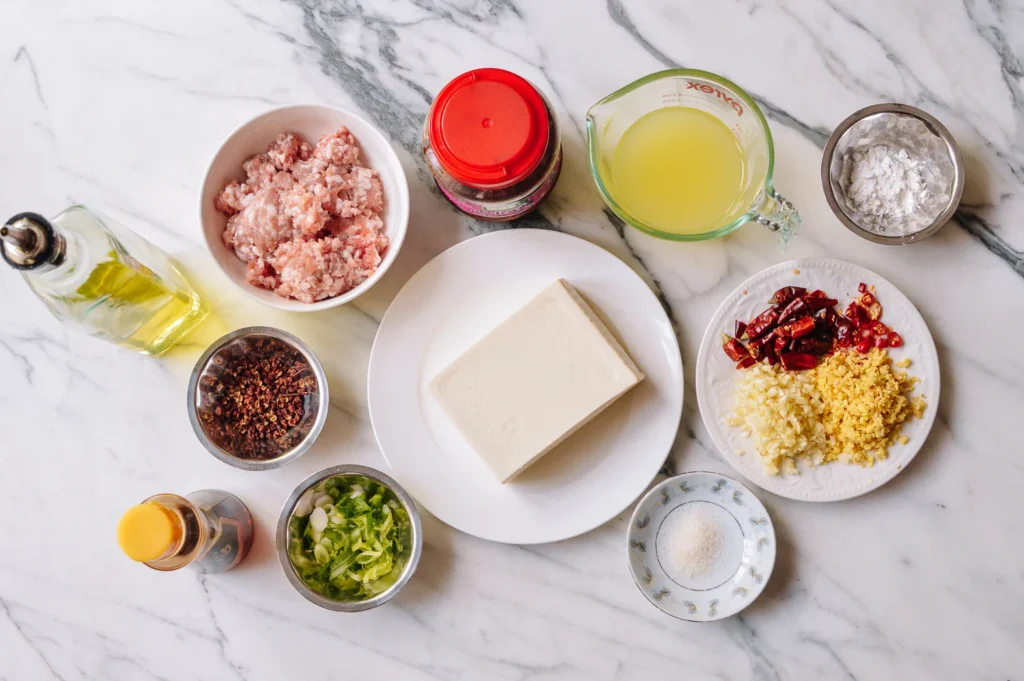
Coarsely ground Sichuan peppercorns. You can use a mortar and pestle to grind the peppercorns coarsely, or achieve a finer grind in a spice grinder or a powerful blender. If using a blender, you’ll just need to make a larger batch and then store it. You can also find pre-ground Sichuan peppercorn powder in well-stocked Chinese grocery stores.

That said, while the amounts can be adjusted, some ingredients are non-negotiable, like the Sichuan Peppercorns and the Spicy Bean Sauce (Doubanjiang).
The Mala Market is a great resource for authentic, premium Sichuan (and other Chinese) ingredients. They offer a Pixian Doubanjiang sourced and packaged for them in Sichuan, as well as a super-premium 3-year-aged Pixian Doubanjiang. You’ll also find premium Sichuan Peppercorns in their shop.
Mapo Tofu Recipe Instructions
(Scroll down to the recipe card for the full list of ingredients!)
First, we toast the chilies. If you have homemade toasted chili oil, you can skip this step. Heat your wok or a small saucepan over low heat. Add ¼ cup of the oil and throw in the fresh and dried peppers. Stir occasionally and heat until fragrant, about 5 minutes, ensuring that the peppers don’t burn. Remove from heat and set aside.
Heat the remaining ¼ cup of oil in your wok over medium heat. Add the ginger. After 1 minute, add the garlic.
Note:
Previously, we included a step of adding the ground Sichuan peppercorns at this step to infuse the oil. However, it resulted in mixed results for some folks, as it is easy to accidentally burn the ground peppercorns. We now recommend adding it after you add the pork. (Note: you can use Sichuan peppercorn oil as a shortcut to this step.)

Fry for another minute, and then turn up the heat to high and add the ground pork. Break up the meat and fry it until it’s cooked through.
Add the ground Sichuan peppercorns.

Add the spicy bean sauce to the mixture…
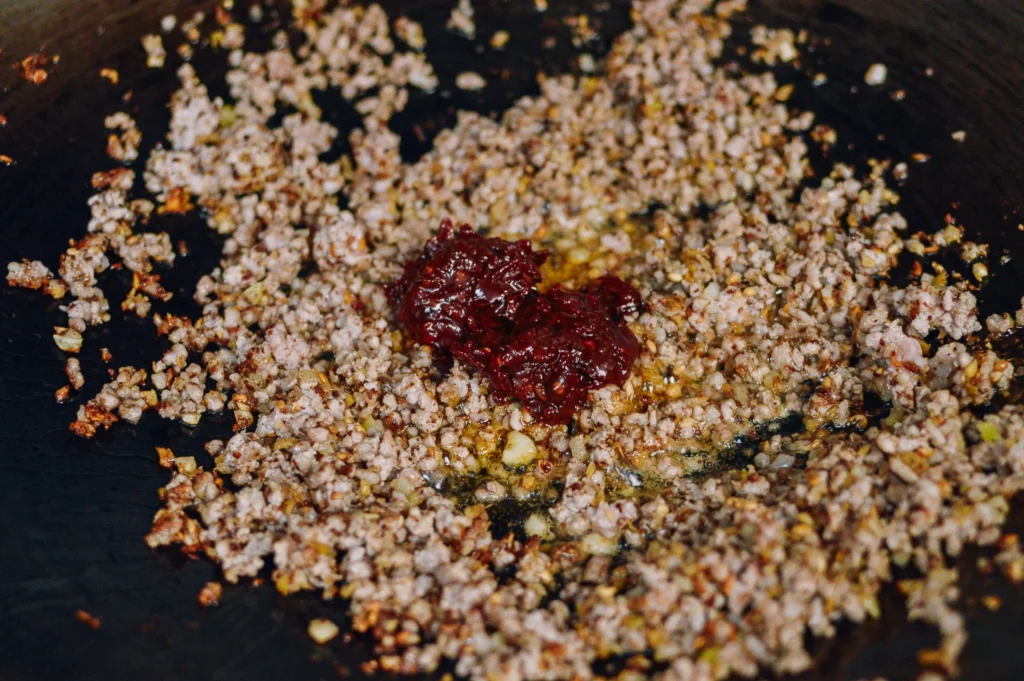
And stir it in well. You’ll see the color change!

Add ⅔ cup of chicken broth to the wok and stir. Let this simmer for a minute or so.
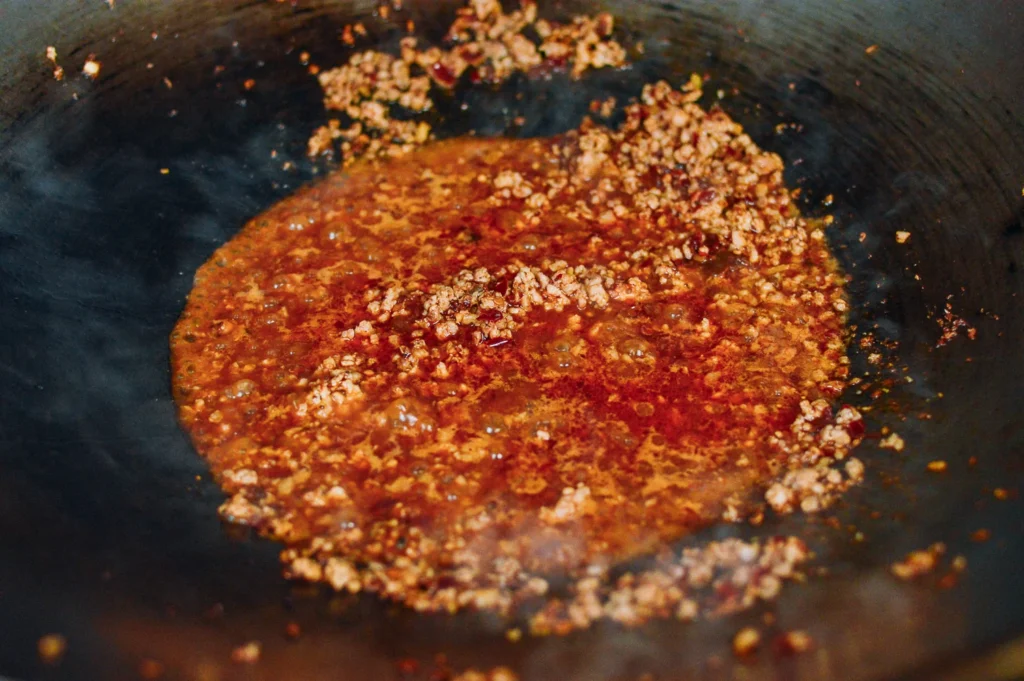
While that’s happening, ready your tofu and also put a ¼ cup of water in a small bowl with your cornstarch and mix until thoroughly combined.

Add the cornstarch mixture to your sauce and stir. Let it bubble away until the sauce starts to thicken. (If it gets too thick, splash in a little more water or chicken stock.)
Then add your chili oil from before—peppers and all! If you are using homemade chili oil, ONLY use the standing oil, as it’s likely that you have salted it and you only want the oil, not additional salt.
Stir the oil into the sauce, and add the tofu. Use your spatula to gently toss the tofu in the sauce. Let everything cook for 3-5 minutes. Add the sesame oil and sugar (if using), along with the scallions, and stir until the scallions are just wilted.

Serve with a last sprinkle of Sichuan peppercorn powder as a garnish if desired.

And your Ma Po Tofu is done!
When you make this for friends and family, I guarantee that they’ll ooh and ahh over how much this Mapo Tofu looks and tastes just like what your favorite Szechuan/Sichuan restaurant makes. We sure did!
And you’ll be surprised at how simple it actually is. The key is to prep everything before you actually start cooking.
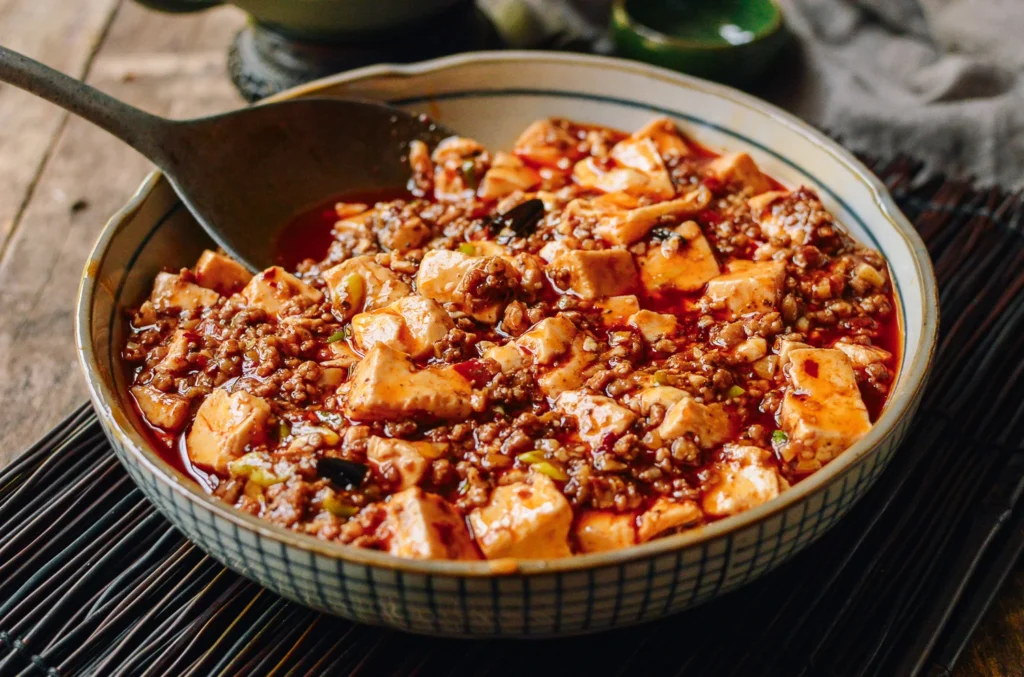
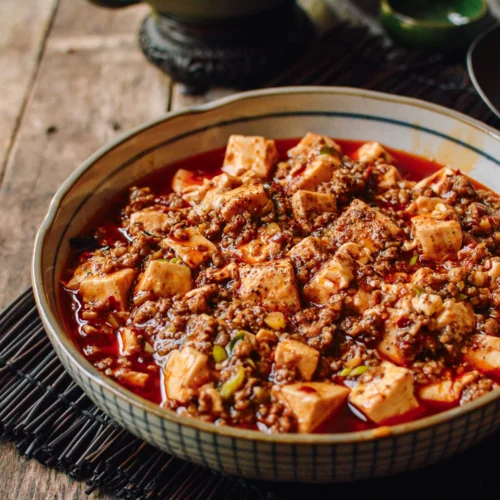
Mapo Tofu
Ingredients
- ½ cup oil divided
- 1-2 fresh Thai bird chili peppers thinly sliced
- 6-8 dried red chilies roughly chopped
- 1/2- 1 1/2 tablespoons Sichuan peppercorns powdered or finely ground, reserving 1/4 teaspoon for garnish at the end; if you want a milder flavor use 1/2 or 1 teaspoon ground Sichuan peppercorn
- 3 tablespoons ginger finely minced
- 3 tablespoons garlic finely minced
- 8 ounces ground pork
- 1-2 tablespoons spicy bean sauce depending on your desired salt/spice levels
- 2/3 cup low sodium chicken broth or water
- 1 pound silken tofu cut into 1 inch/2.5cm cubes
- 1/4 cup water
- 1 1/2 teaspoons cornstarch
- 1/4 teaspoon sesame oil optional
- 1/4 teaspoon sugar optional
- 1 scallion finely chopped
Instructions
- First, we toast the chilies. If you have homemade toasted chili oil, you can skip this step. Heat your wok or a small saucepan over low heat. Add half of the oil and throw in the fresh and dried peppers. Stir occasionally and heat until fragrant, about 5 minutes, ensuring that the peppers don’t burn. Remove from heat and set aside.
- Heat the remaining half of the oil in your wok over medium heat. Add the ginger. After 1 minute, add the garlic. Fry for another minute, and then turn up the heat to high and add the ground pork. Break up the meat and fry it until it’s cooked through. Add your ground Sichuan peppercorns and stir for about 15-30 seconds, taking care to not let it burn, as it will turn bitter if it does.
- Add the spicy bean sauce to the mixture and stir it in well. Add the chicken broth to the wok and stir. Let this simmer for a minute or so. While that's happening, ready your tofu and combine the water and cornstarch in a small bowl.
- Add the cornstarch mixture to your sauce and stir. Let it bubble away until the sauce starts to thicken. (If it gets too thick, splash in a little more water or chicken stock.)
- Then add your chili oil from before—peppers and all! If you are using homemade chili oil, ONLY use the standing oil, as it's likely that you have salted it and you only want the oil, not additional salt. Stir the oil into the sauce, and add the tofu. Use your spatula to gently toss the tofu in the sauce. Let everything cook for 3-5 minutes. Add the sesame oil and sugar (if using) along with the scallions and stir until the scallions are just wilted.
- Serve with a last sprinkle of Sichuan peppercorn powder as a garnish if desired.
You Might Also Like












5 thoughts on “Authentic Mapo Tofu Recipe (Sichuan Spicy Tofu)”
I subbed one package BEYOND beef for the meat in this recipe and it worked so well! Super excited to have found another high protein vegetarian meal!
This recipe is wonderful! I didn’t even have ginger and threw in powdered ginger and had to use a jalepeno instead also haha
I usually make this with ground turkey and it still turns out fantastic! I got sichuan peppercorns from Penzey’s.
I made this recipe yesterday and followed it to the letter. I was totally amazed with the dish. Thank you for all of your experimentations that enabled the rest of us to make such an outstanding dish.
i made this and it came out exactly as it looks here which hardly ever happens 🙂
and it tastes AMAZING even if you dial back the heat
Great recipe! Thanks for sharing this. I do think that depending on which doubanjan you use the recipe might need some minced fermented black beans added just for a bit more savory/umami notes but it’s pretty close to perfect.